Showing posts with label movie/TV. Show all posts

Thursday, March 31, 2016

Simon vs. The Homo Sapiens Agenda by Becky Albertalli


I've passed by the bright red cover of Becky Albertalli's Simon vs. The Homo Sapiens Agenda several times while at Canadian bookstore Chapters, but didn't pick it up until now. I really regret not reading it until almost a year after it's April 2015 publication.

Protagonist Simon Spier begins the book by observing, "It's a weirdly subtle conversation. I almost don't notice I'm being blackmailed." The blackmailer in question is Martin Addison "a little bit of a goobery nerd, to be honest," who logs into Gmail after Simon vacates the library computer. Unfortunately, Simon has left himself logged in to his secret email account, the one he is using to email Blue, a gay teenager at his high school. Neither has shared their real identity with the other and the emails provide a place for them both to communicate about their experience. 

Martin takes a screenshot of the emails and threatens to post them to the school's Tumblr, The creeksecrets: "ground zero for Creekwood High School gossip." Simon is not openly gay, and if Martin shares the emails on creek secrets, the school will know immediately. And there's also the fact that Blue will be involved, a relationship Simon doesn't want to jeopardize. 

Simon's narrative voice is so compelling. He's a keen observer. The book bounces back and forth between Simon's narration and the emails he and Blue are sending back and forth to one another, providing readers with "first impression" observations, and also those that are more carefully curated in order to send to Blue. High school drama plays also plays a role, since Simon (and Martin) are involved in the school's production of Oliver! (a play that Jon van de Ruit's Spud also took up). During an early showing of the play to the high school classes, Albertalli's writing becomes so evocative of the high school experience and atmosphere. Her description of a teacher trying to lecture an auditorium filled with high school students took me right back to that experience:
There's this drone of quiet conversation and denim rustling against seats. Someone shrieks with laughter, and someone else yells, "QUIET!" So then a bunch of people start giggling.
"I'll wait," Ms. Albright says. And when the laughter dies down, she holds up the notebook. "Does anyone recognize this?"
"Your diary?" Some asshole sophomore.
Ms. Albright ignores him. "This is the Creekwood handbook, which you should have read and signed at the beginning of the year."
Everyone immediately stops listening. God. It's got to freaking suck to be a teacher. 
As a reader, I was so invested in finding out Blue's real name alongside Simon, but throughout the process, Simon's sense of finding himself takes precedence. Simon's family is just as interesting, and their balance of being both supportive and also over-interested in Simon's life is a strong addition to the novel. 

Simon vs. The Homo Sapiens Agenda was such a fantastic novel, and after finishing it, I found a December news article reporting Fox 2000 acquired the rights for a movie adaptation. Simon's compelling observations and wry narrative voice aren't quite over with the end of the book, and I'm looking forward to seeing this novel adapted into a visual format. 

Thursday, March 5, 2015

A Monster Calls by Patrick Ness


A Monster Calls by Patrick Ness was published in 2011, and although it's written by Ness it was inspired by an idea by deceased YA writer Siobhan Dowd, author of A Swift Sure Cry, The London Eye Mystery, Bog Child, and The Solace of the Road. While the latter two titles were published posthumously (Dowd died from breast cancer in 2007), A Monster Calls was only a contracted idea at the time of her death. Ness was asked to take the idea and write it into a book, which was illustrated by Jim Kay. As Ness states in the introduction to the book, "[Dowd] had the characters, a premise, and a beginning. What she didn't have, unfortunately, was time." It's an incredibly successful novel and won both the Carnegie Medal and the Kate Greenaway Medal in 2012. 

A Monster Calls follows Conor, a 13-year-old boy who is dealing with his mother's terminal illness. He's struggling at school, where he is equally tormented and ignored by bullies and classmates alike, all who know about his home situation. His father has moved from England to the US to start a new family, and he doesn't visit Conor nearly as often as Conor would like. Conor is plagued by a nightmare that seems to occur nightly in his dreams, but it's in reality that he meets the monster who comes to call in this book. He is visited by a monster (who is in the shape of the yew tree behind Conor's house) who visits at 12:07. The monster is old and mythical and insists Conor summoned him for help.

Over the course of the short illustrated novel, the monster tells Conor a series of stories, each which imparts the grey space in-between Conor's understanding of black and white. The stories are medieval and have a fairy tale quality. Conor inhabits each story as the monster tells it, sometimes participating in the action, though he is meant to be an observer. In exchange for the three stories, the monster asks Conor for one of his own: the truth about the nightmare that haunts his dreams. 

A Monster Calls is simply written, but a complicated and complex book. At its heart, the book is about separating thoughts from actions, which reminded me greatly of the Invisibilia podcast episode "The Secret History of Thoughts." As the monster tells Conor, "You do not write your life with words…You write it with actions. What you think is not important. It is only important what you do."

It's a brilliant and powerful book, and incredibly sad. The language is enhanced by the illustrations, most of which bring the monster to life, as well as his nightly visits to Conor. It would appeal to readers of all ages: it's certainly a children's novel as much as it is a story for adults. Conor learns that stories don't always have happy endings, and that unhappy endings are important for all readers. He reflects, "That's one thing the monster had definitely taught him. Stories were wild, wild animals and went off in directions you couldn't expect.”

Tuesday, February 24, 2015

All the Bright Places by Jennifer Niven

Since I finished Donna Tartt's The Goldfinch, I've read about half a dozen books that I've started and put down, and just haven't been able to get into. Part of the problem was that, over the Christmas holidays, I sped read Camilla Lackberg's Swedish mystery series, and then read fantastic books by Marian Keyes and Liane Moriarty. I had a really great run of books. Now I've had a run of not so great books. Until Jennifer Niven's All the Bright Places

Jennifer Niven's All the Bright Places has been on my radar since I first heard about it in 2014. Slated with a 2015 publication date, I forgot about it until I saw it in my local Chapters over the weekend and read it practically in one sitting. 

All the Bright Places is a boy-girl perspective book, alternating between the viewpoints of high school seniors Finch and Violet. I love dual perspective books, especially Tom and Laura McNeal's Crooked, which is a standout YA title. Finch and Violet meet each other at the top of the bell tower at their high school, where Finch comments, "let's face it, we didn't come up here for the view." Both are standing on the edge, contemplating something, and eventually, they talk each other down. Finch, who's a bit of a social pariah, is not the right person to be caught with in the bell tower, and bystanders spin a story that places Violet as the hero who has stopped Finch from committing suicide. No one knows that she was up there first, and that Finch helped her back over the railing. Violet comments, 
Of all the people I could have "saved," Theodore Finch is the worst possible choice because he's a Bartlett legend. I don't know him that well, but I know of him. Everyone knows of him. Some people hate him because they think he's weird and he gets into fights and get kicked out of school and does what he wants. Some people worship him because he's weird and he gets into fights and gets kicked out of school and does what he wants. (22-23)
What happened in the bell tower bonds them together, and before Violet knows it, she's working with Finch on a history project about the wonders of their great state of Illinois. Together, Violet and Finch have to visit these so-called wonders and create something tangible to hand in at the end of the semester. The only problem is, quite a few of the wonders are far away. And Violet won't get into a car. And she certainly won't drive one. She's still reeling from the car accident that killed her sister Eleanor but left her alive. 

Together, Violet and Finch wander Illinois attempting to work at bettering themselves for each other, and to heal what's broken. 

All the Bright Places is one of the first YA novels I've read that throughly explores bipolar disorder and how it manifests, especially in teenagers. Mental illness is certainly explored in YA literature, specifically in books like Ned Vizzini's It's Kind of a Funny Story and Julie Halpern's Get Well Soon. But the depression and anxiety disorders most often explored in books for teens are joined by Niven's honest and heart-wrenching portrayal of a teen with undiagnosed bipolar disorder. All the Bright Places is a fantastic novel, and it's Niven's first for teenagers. She's an author who goes deep into the minds of her characters and isn't afraid to burrow there. The writing is excellent and yokes quotes from Virginia Woolf's novels into Facebook messages, post-it notes, and Violet and Finch's innermost thoughts. Reading and writing are also central to this novel, and readers can certainly trace the rich intertextuality from Victorian to Modern literature. Sex and sexuality are also handled with deft and transparency, and provide an authenticity sometimes missing from teen novels. I'm passing All the Bright Things on to the next reader, and am grateful that it yanked me out of my reading slump. 

Wednesday, December 10, 2014

Big Little Lies by Liane Moriarty


Big Little Lies by Liane Moriarty has been on my to-read list for several months. I love her books, including Three Wishes, What Alice Forgot, and The Hypnotist's Love Story. Liane Moriarty is sister of Australian YA writer Jaclyn Moriarty (who has the best author blog of any writer, even if years can go between updates), and both consistently write fantastic books. 

Big Little Lies begins with a murder during a parents' trivia night at Pirriwee Public School, although the victim is not identified. After a short prologue, the book rewinds to six months before and unravels the mystery. It focuses on three women living in the Pirriwee Peninsula, where their children attend kindergarten together: Madeline, who has just turned forty, rolls her ankle in her new stilettos while telling off a teen driver who texts and drives; Celeste, a beautiful woman who lives with her wealthy husband and her twins sons, and hides a devastating secret; and Jane, a twenty-four-year-old mother who is so young that she is mistaken as a nanny. The book revolves around kindergarten politics, especially as Jane's son Ziggy is ostracized on the first day of school for an act of bullying he claims he didn't commit. 

I loved when the book returned to Madeline's sections. She's described as "funny biting, and passionate; she remembers everything and forgives no one." She lives with her second husband Ed, and their two children Fred and Chloe. Her teenage daughter Abigail lives part-time with Madeline and Ed, and part-time with Madeline's ex-husband Nathan and his yogi wife Bonnie. Lately, Abigail is finding more to like at her father's house, and spends less and less time at home. Making matters worse for Madeline is the fact that Chloe is the same age as Skye, Nathan and Bonnie's daughter, meaning she not only has to live in the same suburb as her ex-husband, but that their children must attend the same school. When Abigail volunteers at a homeless shelter on Christmas Day with Bonnie and Nathan, Madeline can't quite believe it: "She's never peeled a freaking potato in her life," muttered Madeline as she texted back: "That's wonderful, darling. Merry XMAS to you too, see you soon, xxx!" She can't understand how Nathan's new wife is more appealing to Abigail than she is. 

Both Jane and Celeste have slow-to-reveal secrets and stories, and are more connected to both the murder and the mystery. 

I read Big Little Lies in almost one sitting. Moriarty elevates the ordinary, and makes the daily lives of Madeline, Jane, and Celeste must-read material. The screen rights have already been optioned by Nicole Kidman and Reese Witherspoon. Moriarty continues to write outstanding stories, and luckily I haven't picked up The Husband's Secret yet, so I still have more of her writing to binge read over Christmas. 

Monday, September 8, 2014

Me Before You by Jojo Moyes

I'm late to discovering British writer Jojo Moyes, and only recently learned about her 2012 novel Me Before You with this past week's casting announcements of the movie adaptation. I had a chance to pick up Me Before You on Friday and read it over the weekend.

Louisa Clarke is a twenty-six-year-old woman still living at home in the small British village where she was born. She has just lost her job at the Buttered Bun, the main cafe in town, as owner Frank heads back to Australia at the news that a new cafe is moving in to town. 

Louisa has to find a new job immediately as her family relies on what little income she can bring home: her parents, her ailing Grandad, and her sister Treena and her young son Thomas. After trying out a few jobs recommended by the Job Center (but not the opening for a pole dancer), Louisa is given an interview for a caregiver position. She ends up working for Will Traynor, a previously successful businessman who, after a accident in London, is bound to a wheelchair. Lou is meant to take care of him on a daily basis. He's young, depressed, and the job is not anything Lou expects.

Over time, Lou realizes that the reason for her presence in the Traynor home is not exactly just to keep Will company: she is there to try to prevent him from committing suicide, which he attempted before she started working for the Traynors. Will's quality of life is not anywhere near where he would like it to be. Previously, Will bought and sold big companies. He traveled, he skydived, he went on adventures. He lived big. He is not prepared to continue living the life he has been saddled with.

So begins Lou's great undertaking of changing Will Traynor's mind through a series of adventures designed to show Will that his life is still worth living. And Lou's life, too, begins changing along the way. I loved Me Before You and have added Moyes's books to my to-read list, especially The Girl You Left Behind, which I've been hearing so much about!

Wednesday, June 25, 2014

City of Heavenly Fire by Cassandra Clare

I didn't get around to reading The Mortal Instruments series until last summer, when I binge read all five of them: City of Bones, City of Ashes, City of Glass, City of Fallen Angels, and City of Lost Souls. My sister had recommended them (and she already owned all five) and I finally got around to reading them during two weeks of holidays when I had the time to get through the entirety of the fantasy series in a fairly short amount of time. They all blended together, and it was amazing to have that kind of immersive reading experience. 

City of Heavenly Fire begins where the series left off with City of Lost Souls: Sebastian is still trying to bring about the destruction of the Shadowhunters, and it's up to Clary and Jace to do what they can to stop him. They know Sebastian better than anyone, which is more terrifying than it is helpful. They know what he's capable of, and the lengths he will go to destroy the world. 

Since it's been a year since I read the fifth book, I spent the first 100 pages of the book trying to remember what had come before. I kept asking my sister, "Why aren't Clary and Jace brother and sister again?" and I'm pretty sure that was covered in book two or three. The year of lag time between publications was just enough to make me forget much of what had happened in the last few books. I hadn't thought much about it until now, but it always surprised me that I never had that problem reading Harry Potter. Even though there were years (sometimes several) between publications, I was never struggling to remember where Rowling left off with the characters, and what had happened in the last book. I think it has something to do with the school-year formula of Harry Potter. Readers always return to Harry's story in the summer, right before he starts back at school. It's a familiar structure that is easy to relate to, and it's a way to start each book off fresh without losing anything that came before. Harry Potter doesn't have that feeling of where-are-we-now that happens sometimes with other series. 

Making it even more difficult to jump right back into the story was the fact that City of Heavenly Fire begins not with Clary, Jace, Isabelle, Alec, and Simon, but with Emma Carstairs, a new-to-me character (if she had appeared in the books previously, I couldn't remember!). Emma's part in the story is small, but well-developed in the 700-page book. By the time we get to the end, it's clear that Emma is about to become the protagonist of Clare's forthcoming series, The Dark Artifices, which will take place at the Los Angeles Institute. I found Emma to be an incredibly compelling character, and I enjoyed returning to her story and perspective even when much of the action was happening somewhere else. But I did feel sort of duped when I got to the end of the book and realized that Emma was only in the story to set up a new series. If she's taken out of City of Heavenly Fire, there is not much missed in terms of plot development. Only future plot development. 

But overall, I enjoyed Clare's final book in The Mortal Instruments series. So much that I finished it in two days, and I think it's a longer book than any that came before it.

More than anything, it's the dialogue that I read this series for. The exchanges between Jace and Simon especially are my favorite in this installment. Clare is so good at writing believable dialogue between teenage characters - even though the genre is fantasy, the exchanges between characters keep the book rooted in reality, especially a teenage reality. If there's one reason I know I'll re-read this series again, it's for the dialogue. And because of that, I know I will be looking for the publication of Clare's new series in 2015, to see where Emma Carstairs ends up, and what her story will look like. 

Saturday, June 14, 2014

If I Stay by Gayle Forman

When I saw The Fault in Our Stars last week, there were about a handful of trailers beforehand, most of them based on YA novels. The Maze Runner was one, and If I Stay was another. The thing about trailers is they tell you a little bit about the movie you're seeing: it's like Amazon's "if you like this, then you'll like THIS." The movie equivalent uses trailers, suggesting that if The Fault in Our Stars is your thing, then maybe two other YA books to movies will appeal, too. Sometimes it backfires. I'm always so worried when there are a slew of trailers before a movie that I think are nothing like the movie I'm seeing, but someone thinks they are, so maybe the movie I'm seeing isn't really what I think it is?

I'd never read Forman's If I Stay, even though it came out a few years ago, and so the movie trailer functioned like a book trailer. The movie comes out in August, so I figured I had some time to read the book before I'd go to see the movie. I ended up downloading If I Stay as an audio book. It clocks in at five hours, about the same length as John Green's The Fault in Our Stars. It's read by Kirsten Potter, who transitions between the present and the past, as protagonist Mia moves back and forth through time. 

The book starts out on a snow day, a lazy, stay inside weekday that Mia, her brother Teddy, and her parents take off. They live in Oregon, where even the slightest dusting of snow constitutes school closure (Mia's father is a teacher, and it's not hard to convince her mom to skip with them, too). After a big, greasy breakfast, they get in their car and drive to visit their grandparents. Only, on their way there they get in a horrific car accident that kills Mia's mother and father instantly. Mia wakes up by the side of the road and stands up, apparently untouched. But then she spots her own body by the highway, and she sees the paramedics arrive and attend to her. She watches the aftermath of the accident, and follows her body to the hospital, into surgery, and then into the ICU.

While she keeps track of her body in the hospital, Mia recalls her relationship with the most important people in her life - her mom, dad, brother Teddy, boyfriend Adam, and best friend Kim - entering elaborate flashbacks that compose her life before the accident. Only 24 hours pass between the beginning of the book and the ending, and these flashbacks provide the bulk of the novel. Mia's memory is meant to help her make a decision, and to decide whether or not she will let go of life. 

I loved listening to this book in particular through audio book format. Mia's grand question is whether she will stay - living on while her family is gone - or if she will let go. It's the kind of book that I would rush through to get to the resolution at the ending. Pacing is my favorite aspect of audio books - there's no rushing ahead, there's no accidentally flipping to the last page and reading the last line. Audio books facilitate moving through the story at an even, steady, contemplative pace. Which is the reason I have balked against them for so long - I like the freedom of skim-reading a page. Now, it's the reason I'm looking forward to continuing to download and listen to audio books. As well, Mia's passion for playing the cello is at the heart of the book, and her growth as a musician. One of the benefits of the audio book format is that cello music was utilized between chapters, emphasizing the sound that Mia was so drawn to. 

If I Stay will be released later this summer as a movie, and you can view the trailer here:


Monday, November 18, 2013

Horns by Joe Hill

I have been on kind of a Joe Hill kick lately, with Locke and Key, N0S4A2, and Heart-Shaped Box. The Lethbridge Chapters hasn’t had Hill’s Horns stocked for a few months, which might mean it’s going to get a movie tie-in cover and re-release shortly (the film adaptation stars Daniel Radcliffe), but I hadn’t been able to find it at a store to buy in the last little while. I finally took it out of the library to read yesterday.

When Ig Perrish wakes up the morning after a night “drunk and doing terrible things,” he finds two protrusions growing from his forehead. On closer examination, he finds that he has grown a pair of horns, “each of them about as long as his ring finger, thick at the base but soon narrowing to a point as they hooked upward.” Ig tries to remember what he did the night before, believing that he did something so awful that he caused the horns to grow by themselves. He only remembers visiting the foundry, the place that his girlfriend Merrin Williams had been killed the year before. Ig is still suspected in her murder, even though he didn’t do it. The foundry becomes a central location in Horns, and Ig returns there periodically as the story progresses. Beneath a black cherry tree, the inhabitants of the small New Hampshire town that he lives in have left flowers and photos in her memory. Ig can’t stand what other people have turned the place that she died into: “A cross with yellow roses…It was like an electric chair with flora-print cushions, a bad joke.”

As Ig’s day goes on, he discovers that the horns are more powerful than he at first realized. Anyone who sees them tells Ig their deep and dark secrets, horrifying things that they would do if they could. When Ig and his horns are gone, everyone forgets about him and the conversation that they had, and Ig walks away knowing more than he should. When he visits his parents, they tell him that they secretly believe that he did kill his girlfriend Merrin, and that they can’t stand that he is still alive. But it is Ig’s brother Terry who reveals the biggest secret. He tells Ig who really killed Merrin.

The narrative jumps back and forth between the present and the past, creating a picture of Ig’s adolescence with Merrin, his brother Terry, his current girlfriend Glenna, and his best friend Lee, and the decisions and choices that eventually lead to Merrin’s murder. I loved Hill’s character Glenna, “With her tattoos and her paste-on nails, her bookshelf full of Dean Koontz novels, her cigarettes and her rap sheet, Glenna was the un-Merrin.” Even after Hill flushes out her character through flashbacks and through the present story, she continues to be a genuinely surprising and endearing character.

Horns is a revenge novel more than it is a horror story, one that makes Ig’s journey towards the end of the story that much easier to invest in. It’s full of references to TV shows, movies, and music, always tying the story to a very real world even when the fantastical aspects are clear from the start. Judas Coyne, the protagonist of Heart-Shaped Box, even gets a mention, making Hill’s story universe grow even more elaborate and layered.

Monday, October 21, 2013

Locke and Key by Joe Hill


Locke and Key is the Eisner-award winning series written by Joe Hill (son of horror writer Stephen King) and illustrated by Gabriel Rodriguez (who has also collaborated with Clive Barker). It is by far my favorite horror series and it concludes at the end of this month. Locke and Key follows the Locke family – Bode, Kinsey, and Tyler – as they move with their mom (Nina) to the Keyhouse in Lovecraft, Massachusetts following the murder of their father. The Keyhouse is a sprawling New England mansion under the care of their Uncle Duncan, and it’s replete with a mysterious well-house, various rooms, and magical doors. Locke and Key is collected into five volumes so far: Welcome to Lovecraft, Head Games, Crown of Shadows, Keys to the Kingdom, and Clockworks. The sixth and final volume comes out early next year. As the series progresses, Bode, Kinsey, and Tyler learn more about the history of the house, and about the “something evil” that has returned to haunt the Locke family once again.

It is impossible not to note the focus on horror in Locke and Key, even if just observing the backgrounds of the writer and illustration: Joe Hill is the son of horror writer Stephen King, and Gabriel Rodriguez has collaborated with noted horror writer Clive Barker. It is genuinely scary, and that makes it even more fun to read.

The series often depicts graphic violence that is reinforced by suspense and anticipation. The subject material is mature – Mr. Locke, the father of Bode, Kinsey, and Tyler, is murdered by an unhinged high school student at the beginning of the story. His murder is, in part, a result of an offhand comment Tyler made at school about wishing someone would kill his father, one that will forever haunt him and wrack him with guilt.

But then there is also the strange spirit who haunts the bottom of the well in the well-house (a character later revealed as “Dodge”), who appeals to Bode in an attempt to free herself from her prison. She has no qualms about moving people like chess pieces, placing them in positions where they can do the most, and most horrific, harm. For example, she orchestrates the release of Sam Lesser, the teenager who murdered Mr. Locke, and his murder-spree that brings him to Lovecraft in Welcome to Lovecraft.

Keyhouse is in the fictional Lovecraft, Massachusetts, and Hill’s setting of the series is very deliberate. Massachusetts has a rich historical background; as the site of early American colonies, Hill has access to a historical context that goes back to the 1600s. He engages with this history through several flashbacks throughout the series, including to the Revolutionary War. Since the Locke family has always safeguarded Keyhouse, the characters that star in the flashbacks are distantly related to Bode, Kinsey, and Tyler. Their father, murdered in the beginning of the series, is the focus of a long arc set in the 1980s.

One interesting feature of the series is the introduction of a new key and its function as the story progresses. The Keyhouse is filled with keys, some hidden, some right out in the open. Bode finds many of the keys through his exploration of the house, however, Kinsey and Tyler pick up their share of keys as well. The keys also provide one of the key motivations of Dodge, the evil spirit who lives in the well-house. He/she (the spirit shifts between man and woman throughout the series) is searching for the Omega key, which will open “The Black Door” and release the evil inside.

In “Head Games” there is a Head Key that unlocks the back of the characters’ heads, and allows them to put things in and take things out. Kinsey is able to better deal with her grief and unhappiness by taking out everything that is making her sad, while Dodge uses the head key to remove old memories of himself from an older woman.

I have absolutely loved reading Locke and Key over the last few years, especially for Hill’s truly terrifying storytelling.

Monday, June 24, 2013

The Mortal Instruments: City of Bones by Cassandra Clare


I am so late to getting around to Cassandra Clare’s The Mortal Instruments series, even though my sister has been trying to get me to read them for over a year. I started reading City of Bones yesterday morning, and now I’m halfway through the third book, City of Glass (there are five written so far, with the sixth and final book due out in early 2014). Now that I’ve started to read Clare’s books, I sort of can’t stop, and catching up on them now is in perfect timing for the movie release in August.

Fifteen-year-old Clarissa “Clary” Fray lives in New York City with her mother, and she has plenty of freedom to explore the city with her best friend Simon when they’re not at school. On the night that they venture to the club Pandemonium, Clary witnesses an attempted murder that only she can see, as three individuals carrying otherworldly weapons go after a blue-haired boy. Clary leaves the club completely unsettled, especially since Simon didn’t see anything out of the ordinary.

From there, Clary begins to see a world she didn’t know existed, one populated by demons and vampires, werewolves and faeries, and the Shadowhunters who keep the order between them all. Clary is herself a Shadowhunter, however, she has been raised without knowledge of her abilities, or of her own mother’s participation in the Shadowhunter society that she eventually left behind.

When her mother disappears, Clary is brought into the fold by three unlikely individuals: teenage Jace and his foster siblings, Alec and Isabelle. And Simon, her hilarious best friend, is dragged into this world right along with her.

Like all great YA fantasy series, the world expands as the series progresses, slowly introducing new characters and new places, while also expanding on those characters and places that have been integral to the story since the beginning. I love how two relationships in particular grow and develop – that between Clary and Simon and then between Clary and Jace – and go to some pretty unexpected places. But Clary’s relationships work so well (and seem so believable) because she is herself an incredibly strong character who knows herself, even when she is uncertain about the new world she’s been thrown into. In the same way that Katniss is so sure of her decisions in The Hunger Games (even if they don’t always seem like the best decisions), Clary knows her own mind and who she is in a changing environment.

I can’t believe I’m just getting to this series now, but I’m definitely making up for lost time!

Thursday, May 9, 2013

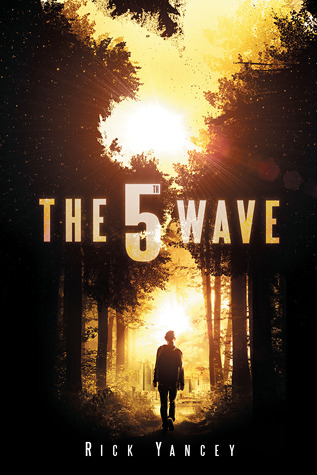
The 5th Wave by Rick Yancey


Rick Yancey’s new dystopian novel for teens, The 5th Wave, was released this week, and coincidentally, its release date was the same day I finally got around to reading the ARC copy I received a few months ago. I wish I had read it sooner than this week (and I really wish I had read it before viewing the movie adaptation of Stephenie Meyer’s The Host, which shares much in common with Yancey’s interpretation and extrapolation of a potential alien invasion of Earth), but instead I read it almost in one sitting on Tuesday. I love Rick Yancey’s other works, especially The Monstrumologist and The Curse of the Wendigo, which are modeled on Victorian novels preoccupied with evolution and eugenics, but written for a contemporary teen audience. The 5th Wave is a departure from these other works, examining a much more present condition and time.

The 5th Wave is told from a handful of perspectives, two of which I won’t share here because it’s really worth it to identify all four narrators when reading the book, but is mostly focused on teenage Cassie, “Not Cassie for Cassandra. Or Cassie for Cassidy. Cassie for Cassiopeia, the constellation, the queen tied to her chair in the northern sky, who was beautiful but vain, placed in the heavens by the sea god Poseidon as a punishment for her boasting. In Greek, her name means ‘she whose words excel.’ My parents didn’t know the first thing about that myth. They just thought the name was pretty.” The book starts in Cassie’s present, where she is hiding in the woods from the Others, aliens who look like humans who are slowly eradicating the earth of its population. If you’ve seen or read The Host, the alien presence there seems very similar to the way they appear in Yancey’s book, that is, a familiar human presence with an alien, or Other, mind. When Cassie explains, “Aliens are stupid,” she means,

The ones we made up, the ones we’ve been making up since we realized those glittering lights in the sky were suns like ours and probably had planets like ours spinning around them. You know, the aliens we imagine, the kind of aliens we’d like to attack us, human aliens. You’ve seen them a million times. They swoop down from the sky in their flying saucers to level New York or Tokyo and London, or they march across the countryside in huge machines that look like mechanical spiders, ray guns blasting away, and always, always, humanity sets aside its differences and bands together to defeat the alien horde. David slays Goliath, and everybody (except Goliath) goes home happy. 
What crap. 
It’s like a cockroach working up a plan to defeat the shoe on its way down to crush it.

Cassie explains the four waves that have taken place already, each wave taking out another chunk of the human population. The first section of the book – told from Cassie’s point of view – was my favorite, as Cassie narrates the isolation and fear that haunts her present situation in tandem with describing life before the invasion. Yancy returns to a normal day at Cassie’s high school, no different from any other, when the 1st wave hit (an electronica magnetic wave that knocks out cars, cell phones, and electricity). Cassie is so likeable as a character because Yancey is careful to show how she got from a high school classroom thinking about her crush and texting her best friend to fighting for her survival in the woods, detailing this transition in a powerful first section. When the perspective changes to another character (Cassie’s younger brother Sam is also a narrator), Yancey is able to build the context and world of his story further, but I always missed Cassie’s voice and narration every time a new character perspective was introduced. Interestingly, Cassie’s first image of the cockroach being crushed by the shoe on the first page of the book continues through, always threading itself back to that original image that Cassie provides.

Consistent with recent sci-fi and fantasy books for teenagers, there is a love story in The 5th Wave, however, it is not as satisfying as I was looking for it to be as a reader. The romance between Cassie and an older teenager named Evan Walker seems incidental to the story, is rushed, and lacks the emotional attachment and empathy that so many fantasy and sci-fi books for teens seem to get so right. In order to keep Cassie’s strong narration and sense of her own self in tact, the romance could have been missed, rather than how it instead seemed to make Cassie an inconsistent and unbelievable character.

The 5th Wave is a strong story by an incredible author of YA books, and gives readers of Divergent, The Hunger Games, and other dystopia books for teens another great addition to the genre. Yancey’s imaginative speculation of an alien invasion is, in its way, very believable and carefully laid-out, and gives the book a sense of veracity that many sci-fi and fantasy books lack. The 5th Wave has already been optioned by Sony Pictures, and so readers who want to read the book before they see the movie should find it in stores soon!