Showing posts with label therapist. Show all posts

Thursday, June 11, 2015

Vanishing Girls by Lauren Oliver


Vanishing Girls is the first novel I've read by Lauren Oliver, although my sister has read and enjoyed her Delirium trilogy, which was published a few years ago. Vanishing Girls is a YA thriller with a twist, which is hinted at by the presence of a blurb by E. Lockhart on the front cover of the book. Lockhart's recent novel, We Were Liars, is another book with a remarkable twist.

Vanishing Girls tells the story of Nick (Nicole) and Dara, sisters who are trying to find their way back to normal after a horrible car crash that left them damaged enough to necessitate months of recovery in the hospital. When they return home, they find themselves in the middle of a major event that is affecting their home town, Somerville: a nine-year-old girl named Madeline Snow has gone missing, vanished from the back of her sister's car while parked out front of an ice cream parlour. The stories are interwoven, presented by a variety of sources. Nick and Dara offer their own perspectives in chapters that alternate between "Before" and "After" the accident. There are also entries from Dara's diary, online articles about the missing Madeline Snow, photographs, and notes. These all work towards piecing together the mystery of Madeline's disappearance as well as helping Nick and Dara heal from their accident. 

Nick and Dara's lives have been slowly eroded. Their parents are in the middle of divorcing, and their father has moved out of the house: "For the first month or so after Dad announced he was leaving, Mom acted like absolutely nothing was different. But recently she's been forgetting: to turn on the dishwasher, to set her alarm, to iron her work blouses, to vacuum. It's lie every time he removes another item from the house - his favourite chair, the chess set he inherited from his father, the golf clubs he never uses - it takes a portion of her brain with it." And Nick can't make things work with Dara anymore. It was Nick who was driving the car the night she and Dara got into the accident, and since they've both returned home, Dara won't talk to her. This is complicated by the presence of Parker, Nick's childhood friend and Dara's boyfriend. He's the awkward thing between them, something one of them has and the other one doesn't. Nick explains,
Dara had just broken up with her latest boyfriend, Josh or Jake or Mark or Mike - I could never keep them straight, they cycled in and out of her life so fast. And suddenly, she would crash movie night with Parker, wearing short-shorts and a tissue-thin shirt that showed the black lacy cups of her bra. Or I would see them riding the scooter together in the freezing cold, her arms wrapped around his chest, her head titled back, laughing. Or I would walk into the room and he would jerk quickly backward, flashing me a guilty look, while she kept a long, tan leg draped across his lap.
Suddenly, I was the third wheel.
Nicks' mom insists that she work at Fan Land, an old amusement park a short bus ride away from their house, for the summer. It's a way to distract her from her problems with Dara, and to keep her both mentally and physically busy. What Nick doesn't plan on is working with Parker for the summer. 

Oliver deftly writes about the relationship between sisters. Nick navigates her way back to being Dara's best friend, while Dara leads Nick through a game that she made up: "It's called: catch me if you can." Meanwhile, the disappearance of Madeline Snow drifts in and out of the background, finally coming to intersect with Nick and Dara. 

It's hard to talk about a book like this without talking about the twist, which waits at the end of the story like a trapdoor, forcing the reader to go back and reconsider everything that's come before. 

Some of Oliver's writing is so poignant that she captures adolescence in a way that seems very right. I loved the switch in perspectives between Nick and Dara, and Dara's frank writing in her diary entries. It turns into a very different book two thirds of the way in, becoming a thriller instead of realistic YA fiction. I didn't mind, because Oliver's writing continues to remain consistent, especially in the small details that make up adolescent experience. I flew through Vanishing Girls, and am checking out the Delirium trilogy next!

Tuesday, June 2, 2015

No One Else Can Have You by Kathleen Hale


Aside from Wendelin Van Draanen's Sammy Keyes mystery series, which is aimed at slightly younger readers (middle grade rather than high school) I can't think of too many YA mystery novels of the whodunnit variety. Kathleen Hale's No One Else Can Have You is a fantastic YA mystery, and Hale gained notoriety in 2014 for more than just her first novel. In an article for The Guardian, Hale admitted to tracking down and stalking a critic, who gave her book one star on GoodReads. The fallout led to the creation of the Twitter hashtag #HaleNo, as other authors, bloggers, and readers responded to Hale's article. Hale is originally from Wisconsin, and is engaged to the hilarious writer Simon Rich. 

No One Else Can Have You is firmly in the same category as Fargo, the 1996 film directed by the Coen brothers, and the 2014 reboot, a TV show on FX. Even the cover art bears similarity to both the movie and TV posters, knit detail of the title and the implication of murder. The novel is set in Friendship, Wisconsin, and the dialogue is peppered with "you betchas" and "doncha knows."


Kippy Bushman is the sixteen-year-old detective in the novel, and her quirky and abrasive personality means that she is probably not the best person to investigate the murder of Ruth Fried. Ruth was found in a corn field behind Kippy's house, murdered in a gruesome and horrific way. She was on her way to Kippy's house for a sleepover - the two were best friends. 

After Ruth's death, Kippy is given her diary with the job of censoring it for Ruth's mother. Basically, this means taking a Sharpie marker to any parts that allude to Ruth's sexual history. After transcribing a few messily- written entries, Kippy finds that she'd have to Sharpie through most of the diary in order to do a sufficient job. 


But Kippy also finds out that maybe Ruth didn't like her as much as she always thought she did. Many of the diary entries focus on Kippy as Ruth writes, "Kippy is so pathetic it makes me nauseous…If we lived anywhere else, like any place remotely interesting, I'd have way more options, and she and I wouldn't even know each other." Police sheriff Staake (pronounced "Steakey") immediately pins the murder on Ruth's boyfriend Colt, but Kippy thinks that's mostly because of the fact that Colt slept with the sheriff's daughter. Kippy ends up teaming up with Ruth's brother Davey, who is just back from fighting in Afghanistan, to find the real murderer. 


There are tons of laugh-out-loud lines in No One Else Can Have You. Kippy is a truly fantastic narrator and even the secondary characters add something great to the story. For instance, Kippy's dad Dom, a middle school counsellor who lounges around the house in bathrobes, even when Kippy has company. When Kippy requests a salad for supper, Dom's at a loss for how to make one (Friendship is a hunting town, and everyone has freezers full of meat). He throws a bunch of almost-veggies into a bowl: "First bacon bits, which we usually use on our baked potatoes, then cheese - lots of shredded cheese. He rips open a bag of frozen peas with his teeth, then goes to the pantry and gets canned tomatoes, and dumps those in, too. Before you can say 'Gross,' he puts the whole thing in the microwave, beeps in five minutes, then turns around with his arms crossed, looking proud." Even the Fried's dogs are characters, "some kind of Great Dane/Saint Bernard/werewolf hybrid." Kippy remembers, "the first time I came over, we pulled up in Mrs. Fried's truck, and my first thought upon seeing them was 'We might not be able to kill those things with the car.' I envisioned them bouncing off the fender, getting up, cracking their knuckles, and then diving through the windshield to eat our necks." Their names are Pasta Batman and Marco Baseball, causing Ruth to quietly explain to Kippy, "Davey and I named them when we were so young we were still a little bit retarded."


There was only one place where the novels lost me, when Kippy is placed in a mental institution with a third of the novel left. It seemed like a placeholder to press pause on the narrative, delaying the reveal of the murderer. But overall, No One Else Can Have You is a great YA mystery, with an unforgettable narrator in Kippy Bushman. 

Tuesday, June 17, 2014

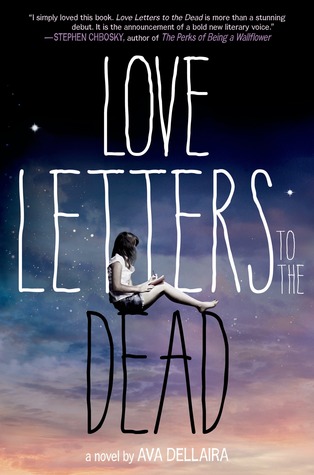
Love Letters to the Dead by Ava Dellaira

Love Letters to the Dead by Ava Dellaira was a title recommended on Amazon after I placed my last order. And, unfortunately, it was too late to go back and add it to my shipment, so I had to wait until I could pick up a copy at Chapters last week. While YA authors Laurie Halse Anderson, Jay Asher, Gayle Forman, Siobhan Vivian, and Lauren Myracle supply blurbs for the back cover of the book, I was more interested by the blurb that appears on the cover: The Perks of Being a Wallflower author Stephen Chbosky's enthusiastic recommendation, "I simply loved this book. Love Letters to the Dead is more than a stunning debut. It is the announcement of a bold new literary voice." I don't think I've read a book like The Perks of Being a Wallflower until I read Love Letters to the Dead. The similarities are astounding, and one of the easiest book recommendations for a teen reader who liked Perks would be Love Letters. And while Perks's Charlie writes his letters to a friend, Love Letters's Laurel addresses her letters to dead musicians and celebrities including Judy Garland, Jim Morrison, Amy Winehouse, and Heath Ledger. Honestly, at times it seems as if the only difference between Perks and Love Letters is the gender of the protagonist: Charlie is male, Laurel female.

Laurel's impetus for writing her letters comes from a high school English assignment at her new school: her teacher, Mrs. Buster, asks the class to write one letter to a dead person. Laurel completes the assignment - she addresses her first letter to Kurt Cobain - but she doesn't hand it in. The letters are too personal, and they get to the heart of what happened to her older sister May a few months before. She died, and Laurel was with her when it happened. Laurel's letters are specific to her relationship with May, to her experience at her new school (she started at a high school in her Aunt Amy's zone, so she wouldn't have to attend the same high school that May had), and her new friends and relationships. One of these relationships, and maybe the most important to Laurel, is with Sky, an older boy at school who has the Jordan Catalano vibe going on (many of the exchanges between the two read like a script from My So-Called Life, and so if you're missing that show, this might be the book for you). This book feels so much like a 1990s book (like Perks was), that I was thrown every time there was a contemporary reference, like to Amy Winehouse, or to The Dark Knight, and other pop culture in the last few years. It has the feel of something older, more nostalgic and plaid-covered.

Dellaira's writing shines throughout, especially her descriptions of Laurel's anxiety, depression, and uncertainty since her sister died. For example, Laurel describes, "My heart was about to spring out of my chest. I was trying hard to keep it in, because I didn't want it to land on the asphalt at her feet, next to the golden ring someone had dropped in the crack. And I really didn't want to cry" (200-201). Or when she is writing to Heath Ledger, and expressing how his death affected her:
I first got to know you from that movie 10 Things I Hate About You, and I always remember that scene where you jump up on the bleachers and sing "Can't Take My Eyes Off You" to the whole girls' soccer team to capture the heart of the girl you like. But after that, even though you got a lot of offers, you wouldn't do any more teen movies. Instead, you ate ramen noodles in your apartment and waited. You didn't just want to be famous, you wanted to be true to yourself. And eventually you got more roles, better ones, and you became the kind of grownup that made growing up seem okay, like you don't have to lose your spirit in order to get older. You became the kind of father that any daughter would have wanted to have. When they found you in your apartment, dead from too many pills, I really did think it was an accident. I don't think you meant to go. (210)
Laurel weaves her own story of loss with that of celebrities and musicians: those who have lost, have been lost, and have become the loss in others' lives.

I'm usually a reader who always wants more at the end of a book, an extra chapter, an epilogue, or an afterword. But I found myself wishing that Love Letters to the Dead ended without an epilogue, and had stopped instead with the hopeful, if inconclusive, last words, "I know I wrote letters to people with no address on this earth. I know you are dead. But I hear you. I hear all of you. We were here. Our lives matter" (313). The epilogue undoes the careful work of the series of letters, and although Laurel carries with the theme (the epilogue is a letter to another dead person, her sister May), there was something simple yet heartbreaking in the anonymity of Laurel's letters, addressed to Jim Morrison and Judy Garland, that I didn't feel in the same way when May became the addressee. I liked the uncertain hope that Laurel ended with before the epilogue, the understanding that things would be different, but that she would keep on going and living and hoping regardless.

Friday, June 13, 2014

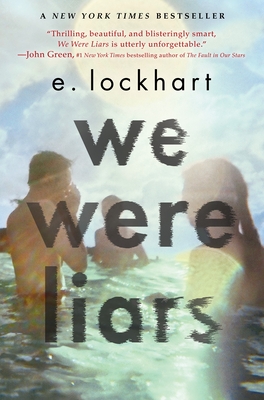
We Were Liars by E. Lockhart

There is nothing better for book recommendations than a conference on YA literature. While I was in Baton Rouge, LA last week, I kept a running list of book titles and authors on my phone, adding five or six books to it every day. The YA lit conference at LSU was composed of two keynotes each day presented by an author and an academic, a selection of workshops in the mornings, and breakout sessions in the afternoon. All of these options for learning about and engaging with YA lit were compounded by author readings and receptions in the evenings. My list grew, and on the penultimate day of the conference I put together a sizable Amazon order, timing it right so I'd get home to a big box of books.

E. Lockhart's We Were Liars was by far the most talked about book at the conference. It was cheer-leaded most enthusiastically by conference organizer and professor Dr. Steve Bickmore, and it was one of the first books that made the shift from Amazon Wishlist to Amazon Order when I had a chance to act on all of the recommendations. I read We Were Liars in one sitting, and finished it late last night. 

We Were Liars takes place on a private island off the coast of Massachusetts, anchored by four family estates: Clairmont, Red Gate, Cuddledown, and Windemere. The island belongs to the Sinclairs, an old and moneyed family that summers together, traveling in from New York, Burlington, VT, and Cambridge, MA. Harris Sinclair oversees his family: his three daughters and their collection of dogs and children. Cadence (Cady for short) is Harris's oldest granddaughter, and she recounts the summers from when she was fourteen to seventeen on the island. The summer provides the only opportunity for her to reconnect with her two cousins Johnny and Mirren, and Gat, an almost cousin (his father is in a new relationship with Johnny's mother). Together, the four of them are the Liars.

Their lives are opulent, their summer lives even more so. Lockhart details the rich food and drink served by nameless staff, the endless games of tennis, access to private beaches and long stretches of ocean, and huge houses filled with expensive and beautiful things. Cady's descriptions of life on the island are engrossing and poetic: "That first night, I cried and bit my fingers and drank wine I snuck from the Clairmont pantry. I spun violently into the sky, raging and banging stars from their moorings, swirling and vomiting" (16). She captures the untouchable mythology of the Sinclair family, the stories that are told and retold and whispered about them, the Sinclairs, and the summer of her fifteenth year when everything changed. 

We Were Liars often feels timeless, even though there are technological markers - iPhones and iPads - that set it firmly in the present. Lockhart communicates a sense of out-of-place and out-of-time, using the mythology of the Sinclairs and fairy tale structures to make the island a place removed. And then there is another device that reminds readers of the contemporaneity of the book. So often YA books have references to the classics in them: books like Perks of Being a Wallflower, where Charlie's English teachers passes him titles such as The Great Gatsby, Naked Lunch, and Catcher in the Rye. The references validate canonical texts, and acknowledge that teens reading YA books could also read the classics. But something different happens in We Were Liars. The books that are referenced throughout - those that Cady and her cousins are reading - are not only classics, although Tom Sawyer, Being and Nothingness, and others are there. They are contemporary, they are YA, they are popular titles for teenage readers. While Diana Wynne Jones makes an appearance - Cady gives away her copy of Charmed Life - I was more interested in the presence of Australian author Jaclyn Moriarty. Gat gives Cady a Jaclyn Moriarty book ("I'd been reading her all summer") and inscribes it with "For Cady with everything, everything. Gat" (116). References like these validate YA literature, and acknowledge that teens reading We Were Liars may also have read Jaclyn Moriarty. 

I loved We Were Liars. It reminded me of Daniel Handler's The Basic Eight, which I haven't written about yet but I'm planning to, and The Bell Jar, a strange mix of reality and non-reality barely distinguished from one another.  

Wednesday, July 3, 2013

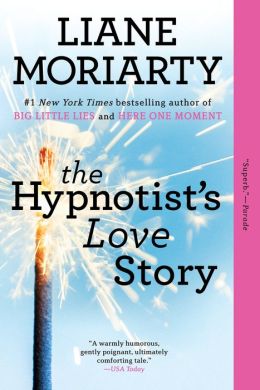
The Hypnotist's Love Story by Liane Moriarty


I have been reading Jaclyn Moriarty’s books since Feeling Sorry for Celia came out in the early 2000s, and I always check her blog for updates. Moriarty’s blog is as well written as her books, and reading a new post is almost like reading a short story, or a series of short stories, when she updates. I think it was through her blog that I found out that her sister, Liane Moriarty, writes for adults. Now I am always on the lookout for both a new Jaclyn Moriarty book, and a new Liane Moriarty book as well.

I haven’t written about Liane Moriarty’s book What Alice Forgot here, but I should have when it came out a year or so ago (it is so good). Instead, I picked up her newest publication, The Hypnotist’s Love Story, last year, and I think it’s more timely to write about it instead since it’s a little more recent!

The Hypnotist’s Love Story is about two women who have one man – Patrick – in common. Ellen O'Farrell is a hypnotherapist working out of the house that her grandparent’s left her. She takes clients in a room that overlooks the ocean and makes a comfortable living that way. When she meets Patrick, she is surprised that she might have found a lasting and meaningful relationship. But when Patrick reveals that he has a stalker – his ex-girlfriend Saskia – rather than worrying about the posed threat, Ellen is instead intrigued. Saskia has been following Patrick for the years since he left her: following him down the highway in her car, reserving a table for herself in the restaurants where she knows he’ll be, following him on foot from place to place. Patrick explains that Saskia is actually sitting in the restaurant with them on one of their dates (although Ellen doesn’t see her). Thinking he is breaking up with her (instead of worrying about Saskia’s presence in the restaurant), Ellen tries to talk herself out of what she at first believed was a very promising relationship (it lasts for the first few pages of the books, and is pretty funny in full. At one point Ellen even admits, “She didn’t really like the name Patrick anyway. It was a namby-pamby sort of name. You could imagine your hairdresser being called Patrick. Also, his male friends apparently called him ‘Scottie,’ which was…well, perfectly acceptable really in that Aussie blokey way”).

Saskia is the other character in this novel, and Moriarty frequently defers to her perspective as it alternates with Ellen’s. Saskia has been posing as one of Ellen’s patients since the day she found out Ellen was dating Patrick, although Ellen does not have any idea that she has been meeting the woman she is so curious about on a weekly basis (Saskia changes her name for the appointments, and as a reader, you are right there with Ellen as she tries to guess which one of her clients is Saskia). Moriarty’s sympathy for Saskia is tempered by the way she outlines every action Saskia takes, rational or irrational (and mostly irrational). She becomes an incredibly interesting character, not because of what she does, but because Moriarty explains why she does it.

As well, meeting Patrick does not immediately bring about the happy-ending Ellen is looking for. Patrick’s first wife died when their son, Jack, was born, and she is as much of a presence in his life as Ellen and Saskia are. Moriarty parallels these stories in order to show just how many participants there are in a relationship, as willing or as unwilling as they are.  Liane Moriarty is an exceptional writer, and in The Hypnotist’s Love Story she writes honestly and humorously about the relationships that Ellen, Saskia, and Patrick find themselves in. 

Tuesday, December 11, 2012

Absent by Katie Williams


"People were talking a lot about death that fall, the fall of my senior year, because Brooke Lee had died right there in the girls’ bathroom across from the gym. I didn’t pay attention to most of it. My classmates were no more than what Usha and I had named them – biblicals, well-rounders, testos, and the rest – and they were always babbling on about one thing or another. But after I died, they started talking about my death and then I had no choice but to listen."

Seventeen-year-old Paige Wheeler fell off the roof of the school during physics class. At least, she’s pretty sure that her fall was an accident. She died, but instead of moving on, she finds herself stuck at Paul Revere High School, locked into a radius that allows her to venture just to the edges of the school grounds. Brooke and Evan are two other seventeen-year-olds who died at the school – Brooke from a cocaine overdose in the girls’ bathroom, and Evan from something else, although he is hesitant to talk about it. He has been at the school for years, but neither Brooke nor Paige know for how long.

The three ghosts haunt the school, attending classes during the day and retreating to the library at night. Evan attends all of Mr. Fisk’s art classes, but Paige is more deliberate in her daily actions. She follows her best friend Usha and eavesdrops into conversations that have her death as the topic. When “the gaggingly beautiful Kelsey Pope” spreads a rumor that Paige jumped from the roof, committing suicide, Paige decides she has to do something. She doesn’t want the rumor getting back to her friends and family; she is positive that her fall was an accident.

As she follows her friends and other students around the school, Paige discovers that she has the ability to possess them – for a few minutes or for an entire day of school. All they have to do is think her name – Paige – and she can leap inside of their bodies, talking and acting as she will. She follows Usha through the halls, watching how her best friend deals with her death, remembering their shopping trips to secondhand stores when Paige was alive: “At least I fold up easily in my soft-skin clothes – old jeans and velvety jacket from one of Usha’s vintage scrounges. She’s convinced me to like about used clothes what most people hate: the other bodies that have unstiffened their elbows and knees, stretched out their pockets, salted them with sweat, only to toss the clothes out at the precise moment when they are really ready to be worn.”

Absent is a book about the reaction to death, and in this case, not just the reaction of students to the death of a friend, but how a teenager reacts to the fact of his/her own death. Paige is around to watch her friends in the aftermath of her fall, and she fears the day that they will start to forget about her, slowly but surely. She died as a senior, and she faces the fact that the people who know her well will all be graduating from high school at the end of the year. Williams weaves Paige’s confusion over her death with the reality of the world moving on without her. Her desperation leads her to inch her way back into the lives of her friends in any way she can.

I read Absent almost all at once, but the story lost me near the end. The careful way that Paige comes to terms with her death, and the difference between her accidental fall or possible suicide, is unwound by a supernatural turn near the end of the book. Although this is a supernatural story – Paige, Evan, and Brooke are ghosts haunting their high school, and have the ability to possess the students there – the supernatural aspects were used to heighten the sense of mortality, death, and resolution. Initially it was a much more human book because of way Williams employed the supernatural. But something about the end of the book and this turn did not follow with the careful narrative Williams told for almost 150 pages, which is instead stopped short by a shorthand version of the “deus ex machina.”

Regardless, Absent places Williams’s writing on display, and invites the reader to get wound up in a lyrical, descriptive story narrated by a likeable and ghostly protagonist. She writes about high school in a realistic and perceptive way, getting right the small details about the way it becomes a small world for teenagers for the years that they are stuck there. 

Saturday, March 10, 2012

Your Voice in My Head by Emma Forrest

Books sometimes come at exactly the right time. I picked and read Emma Forrest’s Your Voice in My Head last night and read it in a couple of hours. But last spring, I picked up the book at a bookstore, sort of mulled over it, and put it back. And I’m so glad I did. Except for the fact that the hardcover cover art is amazing in comparison to the Vintage Canada copy I bought, I’m so glad I waited to pick it up. There are a lot of books that seem like they can almost have a missed potential depending on when you read them, or the circumstances under which you read them, or the circumstance that you could make for yourself to give a book an entryway to be what it could be, instead of the skim-the-plot-and-skip-the-rest. And for some reason, this was the right time to read this book.

At the heart of Forrest’s memoir is her relationship with her psychiatrist, Dr R, a man who impacted her life so deeply. One day when she tries to call his office to make an appointment, she finds out that he has passed away unexpectedly, and it is this event that allows for her retrospection and consideration of the events that brought her to Dr R, her time in his care and conversation, and what follows after his death. She talks frankly about her own destructive behavior, including unhealthy relationships, self-harm and cutting, and bulimia. Her experience is scaffolded by some of the most reflective and beautiful writing I’ve read, and I was already reading and re-reading passages throughout this first read.

But along with Dr R is her highly publicized relationship with her “Gypsy Husband,” and although she never refers to him by any other name, this man seems to be actor Colin Farrell, who she was with a few years ago. Susan Sarandon, Heath Ledger, and Robert Downey Junior also make appearances in the novel (Forrest sends Downy Junior mix tapes when he is in jail). The careful way that Forrest constructs this memoir is what makes it so affecting, a movement between far past and near past that shapes her recovery and daily living with manic depression.

Forrest’s writing style wraps up these new ways of saying familiar things in whimsical, almost bewitching language. Any passage from the book could be highlighted below, but these were some of my favorites:

1. “It’s almost always pills with women. It’s a gentle seeping out women seek, like on a classic soul record, when the volume on Otis Redding just slowly gets turned down until he’s gone. What happens after the fade-out? What are the musicians doing now in that room? Take me there. Take me there.”

2. “On my third or fourth day there, they bring in a homeless boy who has, like many patients, been picked up from the streets. He has a swastika carved into his forehead because voices told him to do it. I am extremely scared of him, do I force myself to make conversation. He asks what I’m listening to on my Walkman and, ashamed, I say ‘George Michael.’ ‘I like George Michael,’ he says, furious at me for making it seem shameful. Never use pop culture as delineator with someone who hears voices. You don’t know what they hear between the melodies. On my last day, I leave him my Walkman and all my music. I wonder if it’s easier to navigate a stay in a psychiatric hospital now iPods exist, or if it impedes progress.”

3. “At our hotel, a red-faced yelling man wakes us at 6 a.m. with his red face and yelling. The tray of breakfast we’d ordered is not nearly as sodden as his demands that GH cast his kids in the movie. I link any problem I have had since then directly to the foul yelling man, as if he were the sorceress entering the ball on my wedding night.”

I absolutely loved this book for its honesty, poignancy, and frankness, and I know I'll be picking up her other novels soon. 

Tuesday, February 14, 2012

The Nature of Jade by Deb Caletti

I was trying to find a book to review for Valentine’s Day, but I thought I would go with an author instead. Deb Caletti is sort of like the West Coast Sarah Dessen. Both write so strongly and beautifully about teens, and also seem to have the ability to write honestly about teen relationships. But Caletti’s style and voice of her characters (I think all of her books are told in first person) have always made me search out her books – a new one usually comes out every year in the spring (I just checked and The Story of Us comes out in April!).

Although her second novel, Honey, Baby, Sweetheart was a National Book Award finalist, all of her books have received recognition and starred reviews, particularly her first, The Queen of Everything.

I wanted to write about The Nature of Jade (2007) in this review, but I have loved so much every book I’ve read by Deb Caletti.

The Nature of Jade is about Jade DeLuna, a Seattle teenager who keeps the live zoo webcam on in her room to watch the elephants. Jade has been diagnosed with Panic Disorder, and the realization of her condition is told in the first chapter, through a series of events. Jade explains what having a panic attack feels like:

“I’m gasping and I don’t even have enough air to cry out, same as the time in second grade when I landed hard on my back after falling off the jungle gym. I am aware, too aware, of my heartbeat, and then Oliver comes in. I’m panicking, shit, because I can’t breathe, and Oliver must see this in my eyes and he goes and runs and gets Aunt Beth. I hear him call her name, but it’s really far off, and I’m in this other world where there’s only this fear and this pain in my chest and no air and this feeling of Need Out!”

Visiting the zoo and watching the elephants on the webcam are ways that Jade stays calm and keeps the panic attacks at bay. But one day, while she’s sitting in her room watching the elephant enclosure from her computer, she notices a boy in a red jacket carrying a baby in a backpack. She starts to wonder who he is, comparing her curiosity to “The Airport Game,” where Jade says people sitting in an airport will ask themselves quiet questions about where the other people in the airport are going.

Jade gets to know the boy in the red jacket – Sebastian – as well as his son and his grandmother who all live together on a houseboat in the Seattle harbor. She is drawn into their complicated world, and finds herself understanding the feeling of being home when she’s with them.

Within the overarching story are so many small pockets of dialogue, every day events, and characters that make this novel so compelling. Oliver, Jade’s younger brother, always stands out for me in this story. Jade helps him fake sick before football practices (“Smush your bangs up with some hot water,” she tells him. “But get a move on. He’s coming. Call out for Mom. You’re so sick, remember? Bleh.”), which he hates (but he loves Narnia and C.S. Lewis).
The novel ends at the beginning of Jade’s own independence, and leaves off with this last paragraph:

“Below, my past life looks like Dad’s train set. Tiny houses, small winding roads, water you could fit into a cup and drink.

"We soar higher, climb. The miniature town below disappears as we lift above the clouds. Life and our love for others is a balancing act, I understand then; a dance between our instinct to be safe and hold fast, and our drive to flee, to run – from danger, toward new places to feed ourselves.”

If you haven’t read a book by Deb Caletti yet, I would really recommend picking one up. The characters, dialogue, and the easy, conversational narration by the Caletti’s protagonists make her novels so worth reading. 

Tuesday, December 13, 2011

It's Kind of a Funny Story by Ned Vizzini

Reading It’s Kind of a Funny Story by Ned Vizzini is kind of like sitting down with protagonist Craig Gilner and hanging out with him for as long as it takes to listen to what he has to say. He starts off his narrative at his friend Aaron’s house, sitting with his friends and finding that he can’t really get into the conversation:

“It’s so hard to talk when you want to kill yourself. That’s above and beyond everything else, and it’s not a mental complaint – it’s a physical thing, like it’s physically hard to open your mouth and make the words come out. They don’t come out smooth and in conjunction with your brain the way normal people’s words do; they come out in chunks as if from a crushed-ice dispenser; you stumble on them as they gather behind your lower lip. So you just keep quiet.”

Except for his inner monologue and the constant reminder of the crippling depression that leaves him sitting in darkened bathrooms for a lot longer than is normal, Craig seems like a normal fifteen-year-old. He has a group of friends who hang out, and within that group are romantic couplings and best friendships and acquaintances. He goes to school, he comes home, he has a normal family that lives in a Brooklyn neighborhood. But once Craig explains something as simple as the difficulty to talk to the rest of his friends, the reader is immediately aware that this book is going to be something important. The novel was inspired by Ned Vizzini’s own hospitalization for depression as a teenager, and the close and personal nature of that situation is clearly communicated through the narrative.

Not long after this first night with his friends, Craig details a visit to his psychiatrist and his eventual decision to check himself into the psychiatric ward of a hospital. His decision comes from a telephone call to 1-800-SUICIDE, where he is kindly advised to make this positive decision for himself. The majority of Craig’s narrative takes place in the hospital, where he must stay for a prescribed amount of time before he is allowed to leave. He meets other patients in the hospital, and these individuals become the personality of the book, as Vizzini crafts a breadth of representation of characters that Craig meets on his stay. The other patients are young and old, male and female, friendly and reclusive, seemingly normal or delusional. While he is there, Craig becomes particularly close with Noelle, a female patient who is the same age he is, and Bobby, who becomes a mentor to Craig while he is in the hospital. These two relationships develop throughout the novel, and provide Craig with a network that begins to pull him towards another direction.

Craig’s goal, what he needs to do, is to make a “mental shift” happen. The description that Craig uses to talk about his depression is one of the strongest aspects of the novel. He speaks in terms of feeling a shift that has to happen to pull him out of one space and into another, something that feels both immaterial and tangible at the same time. It is his passion for art that he eventually rediscovers at the hospital that makes this shift possible. One of the reasons Craig has suffered a breakdown is the stress and anxiety accrued from the competitive nature of applying to the Executive Pre-Professional High School at the end of middle school. Craig placed all of his efforts into studying for the entrance exam for the school, only to find that it was just as difficult and as much work once when was then accepted. He didn’t have spare time or any time that wasn’t spent on flashcards and practice problems and math equations. He finds that he has regained this spare time during his stay in the hospital, time that he uses for art.

Craig’s stay at the hospital is interrupted by brief flashbacks to his life, where he brings into light the evidence that shows why he felt like the hospital was the only answer for his problems. These flashbacks contain one of my favorite descriptions, one where Craig talks about his depression arriving like the legs and tentacles of an octopus, each of which he must wrestle down before another one springs up.

I would really compare this novel to something like Sylvia Plath’s The Bell Jar or J.D. Salinger’s Catcher in the Rye, two books that deal with a sort of teenage depression told in the first person. I think Vizzini updates these classics and makes the same feelings and situations relevant and appealing to a younger reading audience. These three authors – Plath, Salinger, and Vizzini – are speaking about depression, but each of them uses a protagonist so different than the others, that the emotional state becomes tangible in a multitude of ways. Vizzini’s novel is a powerful, immediate story with a lot of humor in it, and it is definitely worth reading. 

Monday, November 7, 2011

The Marriage Plot by Jeffrey Eugenides

The last “book about university” that I read was Canadian author Lynn Coady’s Mean Boy. It was set on a fictional campus modeled on Mount Allison University in Sackville, New Brunswick and followed protagonist Larry Campbell in his struggles to fit into a literary and academic community. Larry was not exactly my favorite character, and while there were a lot of moments where I felt, “Oh yeah, that part of university really seems right,” there were others that seemed far away and foreign. University books seem difficult to get right, if only because the range of university experience is so vast that a story that one reader might react to can be far away from what will resonate with another reader.

So I guess Jeffrey Eugenides’ The Marriage Plot is my university book. It begins on the day of protagonist Madeleine Hanna ‘s graduation from Brown University, a day that includes a visit from her parents, a visit to the hospital, and reconciliations, break-ups, and unexpected events. From there, Eugenides works both backwards and forwards to examine Madeleine’s four years at Brown, and the year off that follows after. In this telling, Eugenides introduces and explores two other important characters, who themselves enter and exit Madeleine’s life. These include Leonard Bankhead, Madeleine’s manic-depressive boyfriend and Mitchell Grammaticus, Madeleine’s religious-studies friend who she maintains a complicated on and off friendship with over the course of the novel. The novel takes place in the early 1980s, and although it is set primarily in New England, Eugenides also follows one of his characters on a European adventure that concludes with a sojourn in India.

Each character explores a different option after university. Madeleine moves with Leonard to Cape Cod, where he has received a position as a biology research assistant. Madeleine’s year off from school to follow her boyfriend gives her time to apply for English graduate programs, and to try to figure out where her life is going to take her next. Meanwhile, Leonard falls into a deep depression, and its subtleties are carefully detailed by Eugenides. Mitchell travels to Europe with his roommate, and although the trip gets off to a rocky start (Mitchell has nowhere to stay in Paris when Larry goes off with his girlfriend, and has to share a hotel room [and a bed] with a stranger), it eventually takes him to India where he volunteers with Mother Theresa. Eugenides seems aware of the options that exist for his graduates, and he explores the repercussions that the decisions create. Meanwhile, their lives at university are currently related through backstory, which creates slight nostalgia for the safe place (largely free of decision making) that these characters have now left behind. The reader is vaulted back and forth between the two, watching the three characters begin to navigate and create their own lives.

Eugenides has a way of writing familiar experiences in a way that really is new, but recognizable. I couldn’t help thinking that the way he does it is in the way a reader might say it in their head, but not out loud (and not so well constructed, or beautiful, or meaningful). There are so many places I found myself saying, “That. It’s like that.” Eugenides gets it right in so many ways. I read this book in two days, and that was even taking my time with it and trying to make the reading go slowly. It seems to combine the feeling of the epic that was present in Middlesex with the mundane and everyday that characterized Virgin Suicides. The Marriage Plot takes the place of “favorite Eugenides book!” and I’ve flagged more passages and quotations in this book than any other that I’ve read recently.

Quotations and Other Great Things:

1. Madeleine’s phone calls to her mom to ask for advice about how to deal with the depressive Leonard, which leads to Madeleine’s mother disliking her boyfriend (and hearing Madeleine repeat advice to Leonard in a voice that clearly seems to belong to her mother makes these exchanges even better): “Shortly after learning that Madeleine’s mother not only didn’t like him but was actively trying to break them up, at a time of year on the Cape when the brevity of daylight mimicked the diminishing wattage of his own brain, Leonard found the courage to take his destiny, in the form of his mental disorder, into his own hands.”

2. “It was always embarrassing when professors assigned their own books. Even Madeleine, who found all the reading hard going, could tell that Zipperstein’s contribution to the field was reformulative and second-tier.”

3. Of Leonard, when his manic-depression takes over: “Seeing him like this, wild-eyed, antiquely dressed, as slick-haired as a vampire, Madeleine realized that she’d never accepted – had never taken full on board – the reality of Leonard’s illness. In the hospital, when Leonard was recovering from his breakdown, his behavior had been peculiar but understandable. He was like someone dazed after a car crash. This – this mania- was different. Leonard seemed like an actual crazy person, and it scared her senseless.”

4. Madeleine’s obsession with Roland Barthes’ A Lover’s Discourse and the running commentary on studying theory in an English program at university. (“Bart. So that was how you pronounced it. Madeleine made a note, grateful to be spared humiliation.”)

5. “But after three solid years of taking literature courses, Madeleine had nothing like a firm critical methodology to apply to what she read. Instead she had a fuzzy, unsystematic way of talking about books. It embarrassed her to hear the things people said in class. And the things she said. I felt that. It was interesting the way Proust. I liked the way Faulkner.”

Thursday, September 29, 2011

The 10 p.m. Question by Kate de Goldi


Twelve-year-old Frankie Parsons worries about everything. He worries about the batteries missing from the fire alarm, the lack of food in the cupboards, and the “ominous” lightness of the pink china pig that holds loose change for the bus fare. These small events lead Frankie to the “10 p.m. Question” – his nightly talk with his mother that happens to occur at ten o’clock at night, when all of his worries need to be dispelled. His anxiety is palpable and relatable, and just one small detail that makes Frankie so sympathetic and important. Kate de Goldi’s novel follows a few short months in Frankie’s unique and funny life, from February until June.

Frankie’s cat is called the Fat Controller and his father is called Uncle George, a fact that isn’t actually revealed until halfway through the story when Frankie has to re-assert that yes, Uncle George is his father, he just doesn’t call him by that title. Frankie’s life is turned upside down at the arrival of Sydney, a girl with dreadlocks and a history of never staying in the same place for a very long time. Sydney and her siblings are each named after the place that they are born in (one is called Calcutta) and she instantly befriends Frankie and his best friend Gigs. Both boys are impressed by her skill at sports (which surprises them, since the only girl they’ve known to be athletic is their friend David Robinson’s sister: “But Gigs rightly said this was because Julie Robinson was practically a man; she was big and fierce and had a six-pack where other girls had breasts). Frankie starts to like Sydney almost immediately and they begin to write and illustrate a book together for a class project.  

The book is organized by chapters that run every second and fourth Tuesday of the month, which also coincides with the occasion of Frankie’s three great aunts – Alba, Teen, and Nellie – coming over for dinner. The women are described as gloriously fat and full of life, and their visit usually coincides with Frankie’s sister, Gordana, exiting the house. Frankie’s brother Louie, however, always comes over for the dinner (and also to do his laundry and to take the spare change off the counters).

de Goldi completely throws everything into creating memorable characters whose dialogue, description, and action gives them the most physical and tactile presence. For instance, before working in a school, Frankie and Gigs’ teacher, Mr. A, worked in a prison. de Goldi brings out this backstory and history in Mr. A by juxtaposing the sort of unknown past and “battle-hardened” disposition with the more lighthearted comedy that comes from Mr. A’s teaching. The two sides come together frequently throughout the novel, one of which occurs early on:

There were many stories circulating at Notts School about the origin of Mr. A’s scar: he’d been in a motorcycle accident; he’d fallen through a window; his wife had thrown a broken plate at him; a deranged prisoner had gone for him with a knife…
“Maybe he just had cheek cancer,” Gigs suggested once. (Frankie hadn’t even known there was such a thing, and he’d added it to his long list of terrifyingly possible diseases.)

But amidst the humor is an underlying feeling of wrongness to Frankie’s life. Even though his mother runs a cake business out of her kitchen, baking teetering layer cakes for the local businesses, she hasn’t left the house in nine years. Frankie has memories of living with his great aunts when he was younger, when his brother and his sister were able to remain at home. And then there are the worries that Frankie repeats in his head about his father’s busyness and the trouble he has in the morning finding things for school and his proclamation, “This house doesn’t work!”

Frankie reminded me a little bit of Christopher from The Curious Incident of the Dog in the Night-time, except this book seems less of a crossover novel than Mark Haddon’s was. The characters, dialogue, and situations in The 10 p.m. Question read so vividly and importantly – de Goldi’s care and investment the story that she creates is evident in her writing. I really came to care a lot about Frankie’s character in the story, and I kind of wanted to share a lot of the small details about him that were collected throughout the book, because they stuck with me for a while. I mean, Frankie’s experience at the swimming pool kind of resonated:

And last Saturday when they’d been there, he’d had his annual unsavory collision with a Band-Aid. There was nothing more revolting in Frankie’s view than freestyling your way, innocent and blissful, into the path of a used Band-Aid. In Frankie’s private hierarchy of squeamish experiences, the casual caress of a stained Band-Aid was right up there with accidentally catching sight of writhing maggots in a forgotten rubbish bag. He’d had to get out of the pool immediately last Saturday and lie on his towel in the sun to recover.

I loved this book. And I loved the characters. And I laughed a lot before it was over.