Showing posts with label summer. Show all posts

Monday, July 4, 2016

Dumplin' by Julie Murphy


Willowdean Dickson, the protagonist of Dumplin', met her best friend Ellen because of Dolly Parton, back when they were kids. Will's aunt Lucy - a Dolly Parton devotee - bonded with Ellen's mom, Mrs. Dryver - a Dolly Parton impersonator - and now Dolly Parton is like the connective tissue of their friendship. Even Will's car is reflective of this theme: it's a 1998 cherry-red Pontiac Grand Prix named Jolene. The book begins with a Dolly Parton quote and describes Will to a T: "Find out who you are and do it on purpose." Will lives her life confidently and fearlessly.

Will lives with her mom, a health care aide by day who is devoted to running and organizing the Miss Teen Blue Bonnet Pageant every year, which has been running since the 1930s. Will's aunt Lucy - her mom's sister - used to live with them, too, but now her room is being cleaned out and Will feels lost without her favourite person in the house.

Will works at a local fast food restaurant called Harpy's, and her classmates crowd in most weekend nights just before midnight to order fries and burgers. She works with Bo, the incredibly attractive guy in the back kitchen. She reflects, "I've had this hideous crush on Bo since the first time we met. His unsettled brown hair swirls into a perfect mess at the top of his head. And he looks ridiculous in his red and white uniform. Like a bear in a tutu." This summer, Bo kisses her outside of the restaurant one night, and they spend the next few months secretly driving to an abandoned parking lot to make out. But Will is increasingly uncomfortable with the way that Bo is keeping her a secret. And Will, who describes herself as a fat girl, hates the feeling of his hands on her body, afraid that he can feel her skin spilling over the sides of her clothing. She breaks it off, and eventually quits her job at Harpy's to cross the street to get a job at the local chilli place.

Fast forward to the beginning of the school year, and Will finds out that Bo has left his private school and now attends her public school, and this time, Will's not the only person who is interested in him. When she decides to enter into the Miss Teen Blue Bonnet Pageant, her friendship with Ellen begins to change, and she finds herself more alone than she has ever been before.

Enter three other girls who are inspired to enter the pageant alongside Will - Millie ("Millie is that girl, the one I am ashamed to admit that I've spent my whole life looking at and thinking, Things could be worse"); Amanda; and Hannah. They become a group worth rooting for as acclaimed author Julie Murphy weaves an incredibly funny, real, and fabulous story with a heaping scoop of romance.

Friday, July 1, 2016

More Happy Than Not by Adam Silvera


Adam Silvera's debut novel More Happy Than Not is billed as a cross between the movie Eternal Sunshine of the Spotless Mind and Aristotle and Dante Discover the Secrets of the Universe by Benjamin Alire Saenz. Protagonist Aaron Soto lives in a one-room apartment in the Bronx with his mom and brother Eric. There's little privacy in the living room that Aaron and Eric share for a bedroom, especially when Eric is up all night playing video games. Aaron spends most of his time in the street with his friends, playing games like Manhunt, which involves chasing each other up and down staircases, through buildings, and down alleys. 

The novel starts when Aaron's painter girlfriend Genevieve decides to go away for a three-week art camp during the summer, leaving him alone. Genevieve has been Aaron's life line, getting him through the period after his father committed suicide, and after he got his own happy-face shaped scar on his wrist. 

Even though Aaron has a group of friends on his block, his sort-of-best-friend, Brendan, is busy with other things this summer. Enter Thomas, a kid who lives nearby, who walks into Aaron's life and causes him to question his happiness, and the in-between state he's been living in. Thomas fills an important gap in Aaron's life when his girlfriend is away, and they're inseparable even when she's back. One of the highlights of the novel is the concept of "Trade Dates." Aaron describes them as something Genevieve came up with: she takes him to a place that she knows he'll like, and he takes her to a place that he knows she'll like. Aaron's place is a local comic book store, Comic Book Asylum, which exists behind a door painted to look like a telephone booth. Aaron and Thomas do something like a "Trade Date," too; but because they don't know each other as well, they each show the other a place that matters to them immensely. 

As Aaron and Thomas grow closer, Aaron discovers things about himself that make it very difficult to continue to date Genevieve, and to be only just-friends with Thomas. Aaron decides that there are two sides to this discovery: Side A is that he likes guys instead of girls and Side B is that he likes one guy in particular - Thomas. 

When things fall apart - first with Genevieve, and then with Thomas - Aaron seriously considers getting a new memory treatment offered by the Leteo Institute. It guarantees erasing certain memories that are too difficult. Aaron even knows someone who has had it done. But is it possible to erase Thomas? And what does Aaron lose by excising those memories and pieces of himself?

More Happy Than Not pairs a fascinating idea - the existence of the Leteo Institute, whose services are similar to those offered in Eternal Sunshine of a Spotless Mind - with deft character development. The book continues to built towards Aaron's decision before pausing in the narrative, and exploring where Aaron has been before, and the choices he has made. I read More Happy Than Not almost in one sitting - it's incredibly hard to put down. I highly recommend Adam Silvera's debut novel, and appreciated the preview of his next novel, History is All You Left Me, that is added to the back of the paperback edition. 

Tuesday, May 24, 2016

The Unexpected Everything by Morgan Matson


The biggest upside of enjoying Morgan Matson's books is that she routinely publishes every year under her name and also under the name Katie Finn. This month, Matson's The Unexpected Everything and Finn's Hearts, Fingers, and Other Things to Cross were published, and while I picked them both up, I read The Unexpected Everything first. 

Teenage Andie has her entire summer already planned out. She's going to attend a prestigious summer program at John Hopkins that will set her up for pre-med and her projected career as a doctor. She's so sure about her own plans, that she feels stressed on behalf of her on-again/off-again Topher, who forgot to secure anything and is going to intern for his father instead. Andie sees the summers between high school as the time to build her resume and the credentials she needs to plan her future. This planning impulse might be an influence of her dad, who is local congressman Alexander Walker. But when a scandal means the congressman has to step down, and the doctor who acted as Andie's referee for the program rescinds his letter, Andie realizes she's going to have to make other plans. She just doesn't expect those plans to be becoming Stanwich, Connecticut's resident dog walker.

Friendship largely shapes the novel, as Andie's tight knit group of friends - Palmer, Toby, and Bri - are together for the entire summer for the very first time. And then there's Clark, named after a superhero and with the same, chunky glasses, who is living in Stanwich for the summer and taking care of Bertie, the dog that comes with the house he's staying in. Clark writes a bestselling series of fantasy novels, and although he's only nineteen, he's achieved a George R. R. Martin level of success, and readers are clamouring for his next novel in much the same way. When Clark and Andie find their lives colliding, they leap into a summer romance, one that is nuanced and exciting.

I flew through The Unexpected Everything. Matson knows how to write YA novels set in the summer, and characters from her other summer novels - Second Chance Summer and Since You've Been Gone - make cameos here. 


Thursday, June 11, 2015

Vanishing Girls by Lauren Oliver


Vanishing Girls is the first novel I've read by Lauren Oliver, although my sister has read and enjoyed her Delirium trilogy, which was published a few years ago. Vanishing Girls is a YA thriller with a twist, which is hinted at by the presence of a blurb by E. Lockhart on the front cover of the book. Lockhart's recent novel, We Were Liars, is another book with a remarkable twist.

Vanishing Girls tells the story of Nick (Nicole) and Dara, sisters who are trying to find their way back to normal after a horrible car crash that left them damaged enough to necessitate months of recovery in the hospital. When they return home, they find themselves in the middle of a major event that is affecting their home town, Somerville: a nine-year-old girl named Madeline Snow has gone missing, vanished from the back of her sister's car while parked out front of an ice cream parlour. The stories are interwoven, presented by a variety of sources. Nick and Dara offer their own perspectives in chapters that alternate between "Before" and "After" the accident. There are also entries from Dara's diary, online articles about the missing Madeline Snow, photographs, and notes. These all work towards piecing together the mystery of Madeline's disappearance as well as helping Nick and Dara heal from their accident. 

Nick and Dara's lives have been slowly eroded. Their parents are in the middle of divorcing, and their father has moved out of the house: "For the first month or so after Dad announced he was leaving, Mom acted like absolutely nothing was different. But recently she's been forgetting: to turn on the dishwasher, to set her alarm, to iron her work blouses, to vacuum. It's lie every time he removes another item from the house - his favourite chair, the chess set he inherited from his father, the golf clubs he never uses - it takes a portion of her brain with it." And Nick can't make things work with Dara anymore. It was Nick who was driving the car the night she and Dara got into the accident, and since they've both returned home, Dara won't talk to her. This is complicated by the presence of Parker, Nick's childhood friend and Dara's boyfriend. He's the awkward thing between them, something one of them has and the other one doesn't. Nick explains,
Dara had just broken up with her latest boyfriend, Josh or Jake or Mark or Mike - I could never keep them straight, they cycled in and out of her life so fast. And suddenly, she would crash movie night with Parker, wearing short-shorts and a tissue-thin shirt that showed the black lacy cups of her bra. Or I would see them riding the scooter together in the freezing cold, her arms wrapped around his chest, her head titled back, laughing. Or I would walk into the room and he would jerk quickly backward, flashing me a guilty look, while she kept a long, tan leg draped across his lap.
Suddenly, I was the third wheel.
Nicks' mom insists that she work at Fan Land, an old amusement park a short bus ride away from their house, for the summer. It's a way to distract her from her problems with Dara, and to keep her both mentally and physically busy. What Nick doesn't plan on is working with Parker for the summer. 

Oliver deftly writes about the relationship between sisters. Nick navigates her way back to being Dara's best friend, while Dara leads Nick through a game that she made up: "It's called: catch me if you can." Meanwhile, the disappearance of Madeline Snow drifts in and out of the background, finally coming to intersect with Nick and Dara. 

It's hard to talk about a book like this without talking about the twist, which waits at the end of the story like a trapdoor, forcing the reader to go back and reconsider everything that's come before. 

Some of Oliver's writing is so poignant that she captures adolescence in a way that seems very right. I loved the switch in perspectives between Nick and Dara, and Dara's frank writing in her diary entries. It turns into a very different book two thirds of the way in, becoming a thriller instead of realistic YA fiction. I didn't mind, because Oliver's writing continues to remain consistent, especially in the small details that make up adolescent experience. I flew through Vanishing Girls, and am checking out the Delirium trilogy next!

Tuesday, June 9, 2015

Open Road Summer by Emery Lord


Author Emery Lord's debut novel Open Road Summer was published in 2014, and was followed up by The Start of Me and You in 2015. The Start of Me and You was highly recommended by author Robyn Schneider in a video when she raved about the love interest in the YA romance. The book was out of stock at the Lethbridge Chapters, so I picked up Open Road Summer and finished it in almost one sitting. 

Reagan O'Neill is joining her best friend Dee Montgomery on a 24-city-tour for the summer. Dee is a country music superstar who has just used her own breakup with childhood sweetheart Jimmy to fuel enough songs for a new hit album. Think Taylor Swift. Reagan shows up to the beginning of the tour with her broken arm in a cast and her bad-news boyfriend behind her and she's looking forward to a summer away with her best friend. 

But things change when a nude photo scandal lands Dee in hot water, her publicist scrambling for a way out. Enter Matt Finch, singer-songwriter, used-to-be member of the band The Finch Four, "a wholesome teen band that included his sister and two brothers. When we were in middle school, the band was a phenomenon. All three boys were sweet-faced, and they had hordes of screaming preteen fans. All the girls I knew wanted to be Carrie Finch, and they all wanted to marry Matt, the youngest and closest to our age." He's the perfect person for Dee to pretend to have a relationship with while he takes over as the opening act for the entire tour. He's just gone through a break-up of his own.

Lord has written song lyrics throughout the novel, some for Dee and others for Matt, many of which dredge up their previous relationships as writing works as a way to move through the aftermath. Reagan describes the title song from Dee's new album Middle of Nowhere, Tennessee as written for Jimmy:

Middle of nowhere, Tennessee,
Exactly where I want to be.
Our initials carved into the old oak tree,
And every road takes me back home.
Middle of nowhere, Tennessee,
Dancing on the porch, you and me.
This is where I was born to be,
No matter how far I may roam.

The behind-the-scenes of a country music tour include Dee donning a disguise to see Matt play at a bar, stopping at a local county fair, and zipping into gas stations to grab snacks. It's a fantastic romance, a not-quite triangle that combines Dee and Matt's fake relationship and the real relationship developing between Matt and Reagan. Reagan's voice and demeanour makes her one of my favourite characters in the recent YA novels I've read. She's been in trouble, she still gets in trouble, but she's incredibly self-aware about her actions and herself. Lord's writing is pitch perfect. There are so many similes that hang at the end of sentences, never falling into cliche. It's some of the best writing I've read in a YA romance. 

I just picked up The Start of Me and You today, and am looking forward to Lord's third novel, which was recently given a release date for 2016.  Open Road Summer is such an excellent summer read, and Lord is certainly an author I'll be watching for!

Wednesday, June 3, 2015

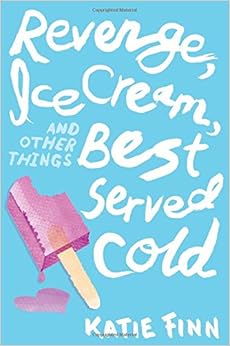
Revenge, Ice Cream, and Other Things Best Served Cold by Katie Finn


Katie Finn continues her trilogy of novels about Gemma Tucker in Revenge, Ice Cream, and Other Things Best Served Cold (a fantastic title). It's the sequel to Broken Hearts, Fences, and Other Things to Mend which was released last year. Katie Finn is the alias of acclaimed YA novelist Morgan Matson, whose books I've talked about here already. The planned trilogy takes place in the Hamptons, where Gemma is staying for the summer with her dad. She's moved into a huge mansion that belongs to her dad's writing partner, Bruce, as they both get underway on an adaptation of the successful erotic vampire novel that is referenced frequently in the book. 

In Broken Hearts, Fences, and Other Things to Mend, a case of mistaken identity led to Gemma's summer getting off to a disastrous start. For the first few weeks of her holidays, she fell head-first into a revenge plan orchestrated by her childhood friend Hallie. Gemma purposefully broke up her father and Hallie's mother when they dated years ago, worried that their relationship would get in the way of her parents getting back together. This included spreading a horrible rumour about Hallie's mother, ruining her career as a novelist. Unbeknownst to Gemma, Hallie has been planning for years to get her back. 


Revenge, Ice Cream, and Other Things Best Served Cold picks up right where the first book left off: after Gemma's real identity is revealed, and her relationship with Hallie's brother Josh is put to an end. Finn does an excellent job summarizing the first book without taking too many pages away from the second book. There are so many books - particularly fantasy series - where there is little or no reminder about what happened in the previous instalment, which is sometimes necessary when there's a gap of 3-5 years between books. Finn summarizes in narrative form, rehashing scenes from the previous book to remind readers of where they will pick up with Gemma.


A few new characters have been added to the story. Gemma's best friend Sophie Curtis (who Gemma pretended to be in the previous book, after Sophie's name was written on her coffee cup) comes to stay for the rest of the summer, and so do Bruce's children, Gwyneth and Ford. Ford, who is suddenly more attractive than Gemma remembers him being. He's lost his braces, and is now a nationally ranked surfer. 


At first Gemma decides not to retaliate, but then thinks better of it. She gets a job behind an ice cream counter (in Morgan Matson's Since You've Been Gone, protagonist Emily scoops ice cream as a summer job, too), and enlists Sophie and Gwyneth in her plans. My sister said she had a huge amount of secondhand embarrassment reading about Gemma's plans for revenge, and I completely agree. The events escalate the night of Hallie's birthday party, setting up a perfect cliffhanger that the third and final instalment will work on resolving. It's a fun, quick read, and I'm looking forward to the resolution of the series next year. 

Friday, August 29, 2014

Broken Hearts, Fences, and Other Things to Mend by Katie Finn

This summer, I bought and read all of Morgan Matson's new contemporary YA novels. Amy and Roger's Epic Detour, Second Chance Summer, and Since You've Been Gone. Morgan's books blend aspects of Sarah Dessen's and Deb Caletti's. She writes strong YA romances that also have interesting, complex characters and situations. When I found out that Morgan Matson also writes under the pseudonym "Katie Finn," I bought Broken Hearts, Fences, and Other Things to Mend, the first book in a series about protagonist Gemma's summer in the Hamptons. I had actually received Broken Hearts as an ARC at a recent conference, but forgot about it completely. I ended up buying the hard cover copy of Broken Hearts, and now both copies are shelved together. Sometimes knowing just that extra bit of information about an author and their other publication history (which you don't always get with a new publication, especially one written under a pseudonym - knowing that Morgan Matson was also Katie Finn is what led me to this book!) is just enough to create interest in a book that is otherwise indistinguishable from a pile of other ARCs. Morgan Matson - and Katie Finn - are now on my permanent "to-read" list, and I'm so excited about the news that Matson is beginning work on a new novel.

Broken Hearts follows teenage Gemma after her break-up with long-term boyfriend Teddy right before summer vacation. Gemma has plans to travel with Teddy to Colombia for the summer where they will be participating in a HELPP program (Humanitarian Education Learning through Progressive Programming). Dating Teddy has changed Gemma's interests and activities. She takes on Teddy's causes (mostly environmental initiatives) and swaps out movie dates for documentary dates. But she doesn't mind. She's happy to be with Teddy, and when he suggests they go to Colombia, she thinks it's a good idea (even if her idea of the program is more movie than documentary):
When Teddy had first told me about this volunteering program, I had assumed it would mean doing things like planting gardens and maybe teaching children to sing, until my best friend, Sophie Curtis, pointed out that I was actually thinking of The Sound of Music. I hadn't realized until I got the application forms that this program involved things like building houses and digging latrines. (pp. 2-3)
So when Teddy breaks up at her while they're shopping for travel supplies at Target, Gemma watches her summer plans vanish. Her mom and stepfather - expecting Gemma to be in Colombia - already have plans for the summer and insist that she can't stay home alone. Cue Gemma's invitation to stay in the Hamptons for the summer with her father, who is living with his writing partner so they can complete a new screenplay. The Hamptons should sound like a better option than building houses in Colombia to Gemma, if not for the fact that the last time she stayed there with her father, things went horribly wrong. She's not sure if she can face up to the damage that she left behind five years ago. 

But the Hamptons is Gemma's only choice, and armed with a brand new break-up haircut, she decides to go. En route, Gemma is mistaken for someone else, and this case of mistaken identity causes her to go by her best friend's name - Sophie Curtis - the entire time she is in the Hamptons. Her hair cut helps to conceal the fact that she's Gemma, the girl who ruined lives and left a lot of damage behind her. As Sophie, can she make amends with her ex-best friend Hallie and Hallie's brother Josh, who Gemma might be falling for? Or is it all going to go wrong?

The sequel, Revenge, Ice Cream, and Other Things Best Served Cold, comes out next year, and hopefully there will be another Morgan Matson book again soon! And I love all of the coffee references in Finn's novel, where the iced soy vanilla latte - extra vanilla - takes center stage as Gemma's beverage of choice. 

Wednesday, August 6, 2014

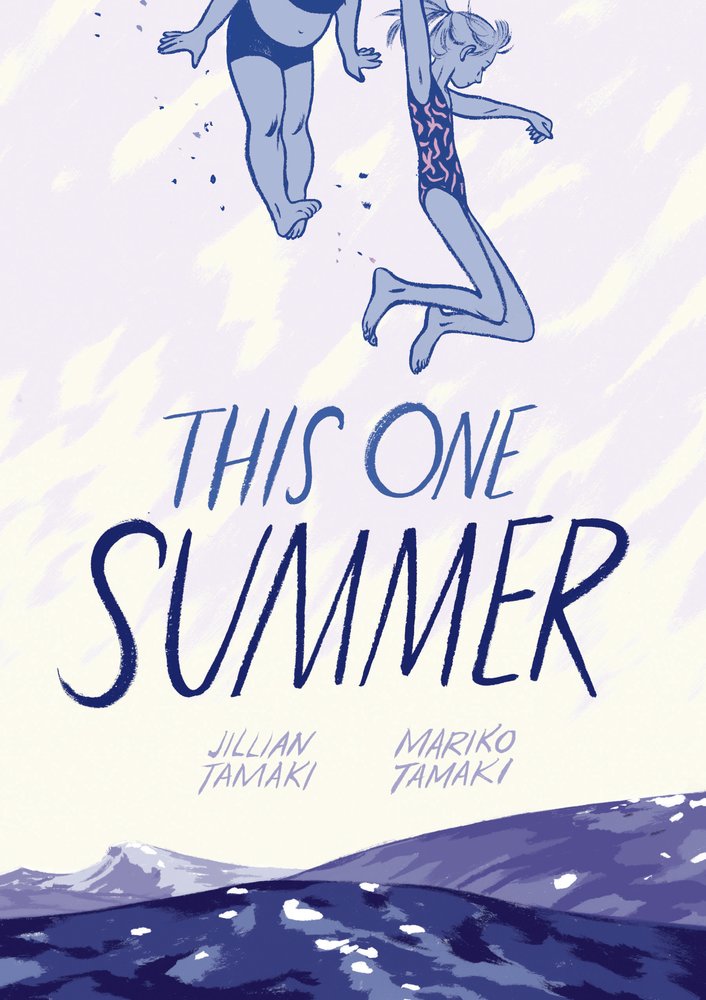
This One Summer by Jillian Tamaki and Mariko Tamaki

I first encountered Mariko Tamaki and Jillian Tamaki's collaborative work in 2009 through a course at Mount Allison University. Skim was on the book list, and was an excellent contemporary addition. I have been hearing about This One Summer all summer, but it wasn't until a few weeks ago that I finally picked up a copy for myself. I loved the format of the book, novel-sized and shelved in the YA Graphic Novels section. Skim was shaped more like a picture book which suited the double-paged illustrations. The blurbs on the back of This One Summer are amazing, with recommendations from YA greats Deb Caletti, Julie Halpern, and Stephane Perkins, and comic artists Hope Larson, Craig Thompson, Lucy Knisley, and Vera Brosgol. The blurbs certainly set the tone for the novel, a graphic coming of age story firmly located in the category of YA lit.

This One Summer starts with Rose's trip with her parents to Awago Beach, where they spend every summer. I loved reading this book right after Morgan Matson's Second Chance Summer, another book that focuses on summers away from home and spent at a lake cabin. A staple of Rose's summer home is Windy, her best friend out at the lake who is just a little bit younger than she is. Rose and Windy spend every summer together. This summer they rent horror movies from the corner store, Rose's way of impressing an older boy who works behind the counter.

While Rose and Windy seem largely untouched by tragedy - they still seem like normal kids hanging out during the summer - tragedy is all around them. Rose's mom miscarried in the ocean the summer before and struggles with coming to terms with the fact that their family of three might not grow larger. Conversely, one of the teenage girls who hangs around the corner store is pregnant, and the father of the baby (the boy behind the corner store counter) won't return her calls. Rose and Windy find themselves in the middle of other people's tragedy, and it's heartbreaking to watch them come to terms with issues that they previously didn't have to know about or understand.

One of my favorite aspects of This One Summer was the Canadiana scattered throughout, both in the text and the images. Rose's parents are drinking out of Tim Hortons cups on the way to Awago, a U of T bumper sticker is stuck to the back of the family car, there are Twizzlers for sale at the corner store. This One Summer is an amazing follow-up to Skim, a beautifully illustrated coming-of-age story that happens over the summer.

Sunday, June 29, 2014

Since You've Been Gone by Morgan Matson

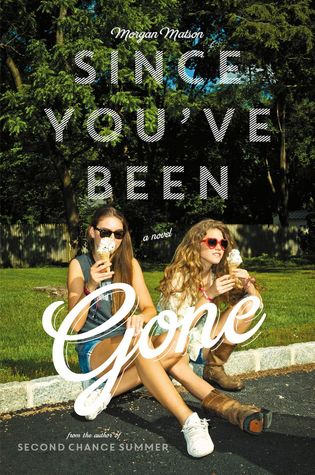
Morgan Matson's Since You've Been Gone has my favorite cover art of any spring or summer publications I've seen out this year, and was the reason I picked it up at the bookstore a few days ago. I didn't think I knew anything about Matson when I bought the book - really, it was all about the cover art. But I started to fill in the pieces in a coincidental way, before I'd even started reading. 

My sister actually got to Since You've Been Gone before I did, because unlike me, she was actually quite familiar with Matson. Matson's second book, Second Chance Summer, is one of my sister's favorite books, and as soon as she saw Matson's name on the cover of this new book, she wanted to read it right away. Meanwhile, I had been doing some research on road trip YA books - Paper Towns, Going Bovine, Lost at Sea, and As Easy as Falling Off the Face of the Earth - when I came across the recommendation of Matson's first novel, Amy and Roger's Epic Detour. Matson's identity as a YA author came together in fairly short order, and all through this new publication, Since You've Been Gone. Since finishing the book, I've also learned that Matson also writes under the name "Katie Finn," so that the new publication Broken Hearts, Fences and Other Things to Mend is actually another one of Matson's books. I've seen the cover all over the place in different bookstores, and added it to my Amazon wishlist a few days ago (Matson's books have really good cover art). 

Since You've Been Gone was a perfect book to read at the beginning of the summer, because it's really a summer book. It takes place between June and August, neatly wrapped up in that hot handful of months. Emily is excited about the summer she's going to have with her best friend Sloane, a teenage girl who moved to town a few years ago and yanked Emily out of her shy, quiet routine. Now the two of them are a package deal, making sure that they get summer jobs at the same place and making plans for parties at the Orchard. But this year, Sloane isn't going to be spending the summer with Emily. She disappears suddenly in June, leaving Emily with a list of thirteen things to do without her. They include straightforward instructions ("go skinny-dipping" "steal something") and also quizzical imperatives ("55 S. Ave. Ask for Mona" "Penelope"). Unable to do anything else about Sloane's disappearance, Emily dutifully begins making her way through the list, hoping that by the time she gets to the end she will have her best friend back. 

But the list does something that Emily isn't expecting. Instead of closing off her world - she feels like she'll be lost without Sloane - it actually opens it up again. She becomes friends with several unlikely candidates, including Frank Porter, the A+ student at her school who is working at an indoor climbing wall for the summer, despite the fact that he's terrified of heights. Slowly, Emily's new friends help her work her way through the list. But will Sloane be waiting at the end of it?

I loved Since You've Been Gone. It had the feeling of a Deb Caletti or a Sarah Dessen book, something you know is going to be a good read by the author name alone. And you know it's going to be at least a little bit of a romance, and a little bit of a find-yourself book, and a little bit of a summer adventure. I'll be reading Second Chance Summer next (which I know my sister has), and then I'm going to get to Amy and Roger and the new Broken Hearts. Matson will be one of the authors whose new publications I will watch out for year after year. 

Thursday, June 26, 2014

Mexican Whiteboy by Matt de la Pena

I have been lucky to enough to see YA author Matt de la Pena speak twice now: once at the 2013 NCTE conference in Boston and then recently at the beginning of the month at the YA Lit conference at Louisiana State University. de la Pena was publicizing his newest YA novel The Living at NCTE, and I wasn't able to make it to the exhibition hall when he was selling and signing his other books. So I picked up The Living, and read The Living, but apparently did not review The Living here (I will!). Luckily, his other books were available for sale at Louisiana State University, and I was finally able to pick up a copy of Mexican Whiteboy, which had been on my book wishlist for years

Mexican Whiteboy focuses primarily on protagonist Danny, although the perspective routinely changes to examine the community in National City, where Danny moves to live with his Dad's family for the summer. Danny's dad is Mexican and his mom is white. Danny's identity is split between both of them, and, as a result, he feels too Mexican for the private school that he attends in San Diego, and too white for National City. de la Pena writes,
And Danny's brown. Half-Mexican brown. A shade darker than all the white kids at his private high school, Leucadia Prep. Up there, Mexican people do under-the-table yard work and hide out in the hills because they're in San Diego illegally. Only other people on Leucadia's campus who share his shade are the lunch-line ladies, the gardeners, the custodians. But whenever Danny comes down here, to National City - where his dad grew up, where all his aunts and uncles and cousins still live - he feels pale. A full shade lighter. Albino almost. (2)
But Danny has something special. He can pitch like no one else can, his long arms giving his pitch a ninety-five-mile-an-hour power. He disrupts the hierarchy of the neighborhood when he shows off what he can do when he's playing baseball, seriously pissing off Uno, who's partly in love with Danny's cousin Sofia. But Danny's not consistent. Sometimes his pitch will fly straight and do just exactly what he wants it to. But other times it's unpredictable, and he can't control what happens to the baseball as it flies towards home base. 

Part of the reason Danny's moved to National City for summer is to be closer to Mexico, where his dad is. Danny wants to save up money over the summer and book a flight down there, and show his father just how much he's turning into the kind of man he'd be proud of. We see glimpses of what Danny believes his father wants to see through the letters Danny puts in the mail, exaggerating aspects of his life in National City with his family and making up stories that he thinks will impress his dad. 

Mexican Whiteboy is a powerful book. The writing is hopeful and poetic - I underlined more phrases in this book than in any other I've read recently. The language shines; it's tactile and real and repeats itself inside your head, vocalizing the dialogue. And the characters are so likable, even when they're not doing likable things, even when they're doing the last thing that you want them to. The book is about a community as much as it's about Danny and his family, and about place and language and connection.

Friday, June 13, 2014

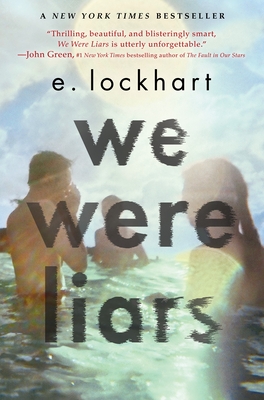
We Were Liars by E. Lockhart

There is nothing better for book recommendations than a conference on YA literature. While I was in Baton Rouge, LA last week, I kept a running list of book titles and authors on my phone, adding five or six books to it every day. The YA lit conference at LSU was composed of two keynotes each day presented by an author and an academic, a selection of workshops in the mornings, and breakout sessions in the afternoon. All of these options for learning about and engaging with YA lit were compounded by author readings and receptions in the evenings. My list grew, and on the penultimate day of the conference I put together a sizable Amazon order, timing it right so I'd get home to a big box of books.

E. Lockhart's We Were Liars was by far the most talked about book at the conference. It was cheer-leaded most enthusiastically by conference organizer and professor Dr. Steve Bickmore, and it was one of the first books that made the shift from Amazon Wishlist to Amazon Order when I had a chance to act on all of the recommendations. I read We Were Liars in one sitting, and finished it late last night. 

We Were Liars takes place on a private island off the coast of Massachusetts, anchored by four family estates: Clairmont, Red Gate, Cuddledown, and Windemere. The island belongs to the Sinclairs, an old and moneyed family that summers together, traveling in from New York, Burlington, VT, and Cambridge, MA. Harris Sinclair oversees his family: his three daughters and their collection of dogs and children. Cadence (Cady for short) is Harris's oldest granddaughter, and she recounts the summers from when she was fourteen to seventeen on the island. The summer provides the only opportunity for her to reconnect with her two cousins Johnny and Mirren, and Gat, an almost cousin (his father is in a new relationship with Johnny's mother). Together, the four of them are the Liars.

Their lives are opulent, their summer lives even more so. Lockhart details the rich food and drink served by nameless staff, the endless games of tennis, access to private beaches and long stretches of ocean, and huge houses filled with expensive and beautiful things. Cady's descriptions of life on the island are engrossing and poetic: "That first night, I cried and bit my fingers and drank wine I snuck from the Clairmont pantry. I spun violently into the sky, raging and banging stars from their moorings, swirling and vomiting" (16). She captures the untouchable mythology of the Sinclair family, the stories that are told and retold and whispered about them, the Sinclairs, and the summer of her fifteenth year when everything changed. 

We Were Liars often feels timeless, even though there are technological markers - iPhones and iPads - that set it firmly in the present. Lockhart communicates a sense of out-of-place and out-of-time, using the mythology of the Sinclairs and fairy tale structures to make the island a place removed. And then there is another device that reminds readers of the contemporaneity of the book. So often YA books have references to the classics in them: books like Perks of Being a Wallflower, where Charlie's English teachers passes him titles such as The Great Gatsby, Naked Lunch, and Catcher in the Rye. The references validate canonical texts, and acknowledge that teens reading YA books could also read the classics. But something different happens in We Were Liars. The books that are referenced throughout - those that Cady and her cousins are reading - are not only classics, although Tom Sawyer, Being and Nothingness, and others are there. They are contemporary, they are YA, they are popular titles for teenage readers. While Diana Wynne Jones makes an appearance - Cady gives away her copy of Charmed Life - I was more interested in the presence of Australian author Jaclyn Moriarty. Gat gives Cady a Jaclyn Moriarty book ("I'd been reading her all summer") and inscribes it with "For Cady with everything, everything. Gat" (116). References like these validate YA literature, and acknowledge that teens reading We Were Liars may also have read Jaclyn Moriarty. 

I loved We Were Liars. It reminded me of Daniel Handler's The Basic Eight, which I haven't written about yet but I'm planning to, and The Bell Jar, a strange mix of reality and non-reality barely distinguished from one another.  

Monday, June 3, 2013

Three Times Lucky by Sheila Turnage


Sheila Turnage’s first book for kids, Three Times Lucky, is set in Tupelo Landing, North Carolina, population 148. Eleven-year-old Moses “Mo” LoBeau works in the café that joins up with her house for the summer. She is under the care of Miss Lana and the Colonel, two larger than life characters who have been like parents to her. Mo floated down the river to Tupelo Landing on the night of a hurricane when she was still a baby, and was rescued by the Colonel. She has lived with them ever since, although she still floats messages in bottles down the river in hopes that her Upstream Mother will read them and come to find her.

When local resident Mr. Jesse turns up dead one day, Tupelo Landing is quickly taken over by Detective Joe Starr and Deputy Marla as they investigate the case. The town is populated by characters who are dynamic and nuanced, from Mo’s best friend Dale (named Dale Earnhardt Johnson III after the race car driver, while the “’III’ in Dale’s name stands for Dale Earnhardt’s car, the Immortal Number 3”), Dale’s older brother Lavender Shade Johnson, Mo’s enemy Anne Celeste, Mayor Little (“We always choose a Little for mayor in case a television crew ever comes to town. Littles like to talk and they’re naturally neat; even their babies dress good”), to Dale’s dog, Queen Elizabeth II.

Aside from Mo, Dale was my favorite character in the book. Although Mo’s back story includes losing and never knowing her mother, her life with the Colonel and Miss Lana seems close to charmed. The Colonel calls her “Solider” and gives her advice that holds up outside of the story itself, and Miss Lana dresses up in wigs and costumes and clearly loves Mo. Dale’s home life, however, is less than perfect. His nineteen-year-old brother Lavender moved out of the house the second he could and lives a short drive away. His mother, Miss Rose, is stuck in a horrible marriage, and Mo notes, “Miss Rose used to be a real beauty, back before time and Dale’s daddy got a hold of her. That’s what people say: coal-black hair, a tilt to her chin, and a sway that made men stand taller.” Dale’s father, Macon Johnson, is in a constant state of drunk, and his behavior is such common knowledge that even Mo thinks hardly nothing of it when they pass him on the road drunk driving:

“That was Daddy,” Dale panted. I nodded, trying to ignore the heat of his breath against the back of my neck.
“He wasn’t weaving,” I said comfortingly.

And when Detective Starr comes to town asking questions, Dale won’t even give up his own name at first. Instead he says,

“Me? My name is…Phillip. Sir.”
The café gasped and I gave Dale a sharp kick in the shin. “I mean, it’s Dale,” he said, his eyes filling with tears. Dale’s family is like that. Let the Law come within twenty yards of them, and every male over the age of six – uncles, brother, fathers, cousins – starts lying his fool head off. Dale says it’s genetic. Miss Lana says that’s poppycock.

Three Times Lucky is one of those rare books where every character could star in a book of his/her own, from protagonist Mo to a much minor, but no less important, character named Grandmother Miss Lacy Thornton. It is also one of those perfect summer books that starts just after school gets out in June, and carries through the summer (Mo and Dale are actually horrified to see their teacher Miss Retzyl outside of the school itself). It feels timeless in its setting, something that could be read fifty years ago and could be read fifty years later. I am really looking forward to whatever Turnage writes next!